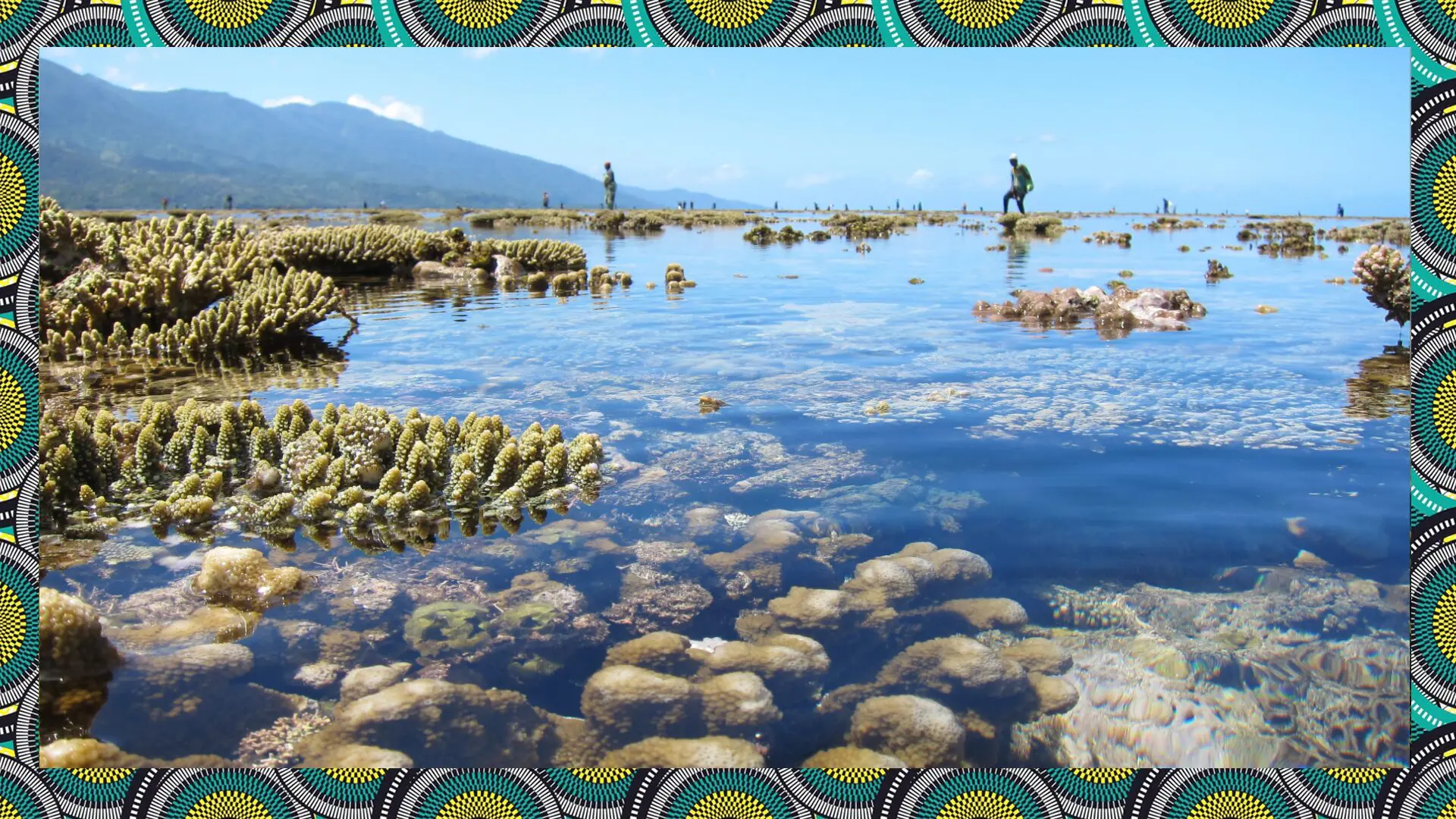

Dans la plupart des conférences sur les sciences marines, les personnes qui vivent le plus près de l’océan – les pêcheurs, les cultivateurs d’algues et les communautés côtières – sont rarement au centre de l’histoire. L’ Association des sciences marines de l’océan Indien occidental (WIOMSA) est le principal pôle régional pour les sciences marines – un espace où chercheurs, praticiens et communautés se réunissent pour comprendre et protéger l’océan Indien occidental. Au fil des années, le Symposium a commencé à s’ouvrir davantage à ces voix. Mais lors de sa 13ᵉ édition à Mombasa, quelque chose de différent s’est produit. Des organisations marines et des leaders issus des communautés qu’elles soutiennent au Kenya, en Tanzanie et au Mozambique n’ont pas seulement participé : ils ont contribué à concevoir la conversation elle-même.
À travers le Community Marine Leaders Hub, une session spéciale co-créée par une coalition de 13 organisations marines dirigées localement, des pêcheurs et des leaders communautaires ont eu l’opportunité de s’exprimer sur la même plateforme que les scientifiques et les décideurs afin de partager leurs connaissances, leurs priorités et leurs expériences vécues. Ces acteurs locaux ne sont pas seulement des conteurs ; ce sont aussi des praticiens de la conservation – ils restaurent les mangroves, protègent les récifs, collectent des données et gèrent les pêcheries. Leurs savoirs traditionnels, combinés à la science moderne, façonnent de nouvelles approches qui soutiennent à la fois les populations et la nature.
S’étendant de la Somalie à l’Afrique du Sud, et jusqu’à Madagascar et aux îles de l’océan Indien, l’océan Indien occidental (WIO) est l’une des régions marines les plus essentielles – et pourtant les moins reconnues – de la planète. Il abrite une biodiversité parmi les plus riches au monde : des récifs coralliens regorgeant de plus de 2 200 espèces de poissons ; plus de 30 mammifères marins ; de vastes forêts de mangroves ; et des herbiers marins qui servent de zones de reproduction et stockent d’importantes quantités de carbone bleu. Ces écosystèmes soutiennent plus de 60 millions de personnes vivant le long des côtes, qui dépendent de l’océan pour leur alimentation, leurs moyens de subsistance et leur identité culturelle.
Les eaux de la région génèrent une estimation de US$20 billion en biens et services chaque année – des pêcheries et du tourisme au stockage du carbone et à la protection des côtes. Pourtant, ces mêmes écosystèmes ont cette année franchi un seuil alarmant point de basculement. Le blanchissement des coraux, la surpêche pratiquée par les chalutiers industriels et le développement côtier s’accélèrent, tandis que le changement climatique réchauffe l’océan Indien occidental (WIO) plus rapidement que la moyenne mondiale. Le résultat est une diminution des stocks halieutiques, une érosion des moyens de subsistance et une vulnérabilité croissante des communautés mêmes qui ont protégé ces eaux pendant des générations.
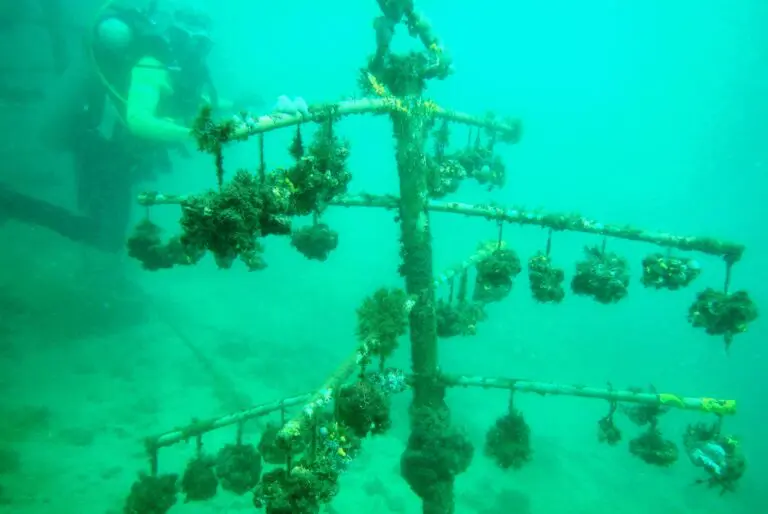
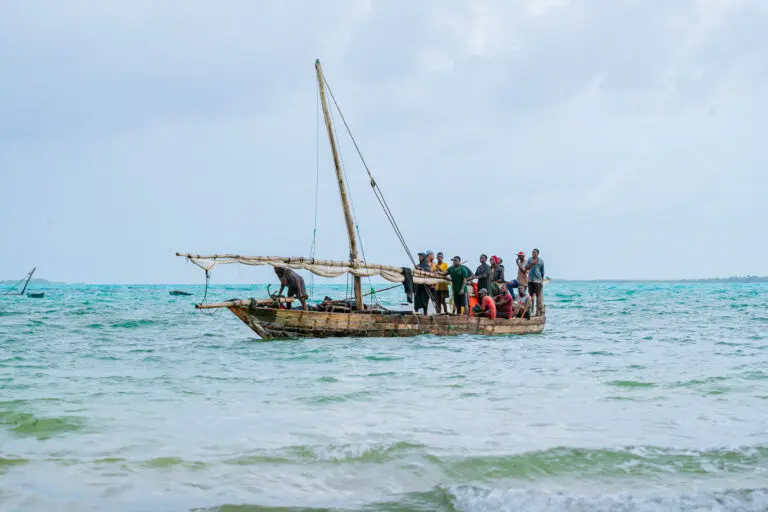
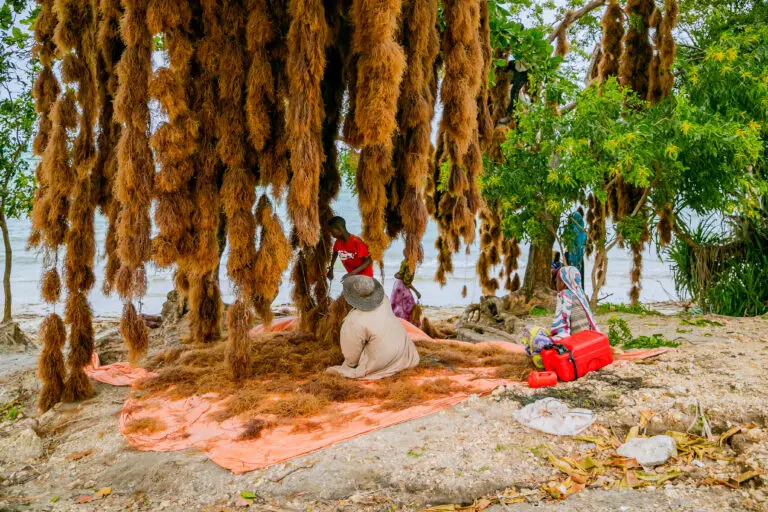
Malgré cette importance, la conservation marine ne reçoit encore qu’une fraction de l’attention et des financements accordés aux écosystèmes terrestres. Les forêts et les réserves fauniques dominent les agendas mondiaux, tandis que l’océan – vaste, complexe et largement invisible – est trop souvent négligé. Pourtant, les mangroves et les herbiers marins de l’océan Indien occidental comptent parmi les plus importants de la planète puits de carbone les plus efficaces; ses récifs protègent des millions de personnes contre les tempêtes et les inondations ; et ses pêcheries nourrissent des nations entières. Protéger cet océan n’est pas une cause environnementale marginale ; c’est un impératif social, économique et climatique.
C’est pourquoi le leadership qui émerge de la région est à la fois si puissant – et si urgent. À travers l’océan Indien occidental, une nouvelle génération d’organisations locales démontre que lorsque les communautés côtières sont aux commandes, la conservation devient à la fois une solution climatique et un mouvement pour la justice. À travers une collaboration fondée sur la confiance and shared learning, they are restoring ecosystems, strengthening resilience, and securing a future for the western Indian ocean and the people who depend on it.
The idea for the Community Marine Leaders Hub was born within a trusted network, the African Marine Conservation Leadership Programme (AMCLP). Facilitated by Maliasili and supported by Blue Ventures, AMCLP equips senior marine conservation leaders with the skills to understand themselves, better support their teams, and catalyze impactful collaborations. Over the years, it has built a community bound by trust and shared purpose – exactly the foundation needed to drive collective action.
“The African Marine Conservation Leadership Program, and our other programs, are really about creating the kind of space where collaboration can actually take root,” said Richard Ndiga, “When leaders from different places come together and spend time learning, talking openly and unpacking challenges, something important happens – trust starts to build. Once you have trust, everything follows. People begin to see the bigger picture, understand each others’ realities, and recognize where they align. That’s when you start to see real joint problem-solving and genuine collective action.”
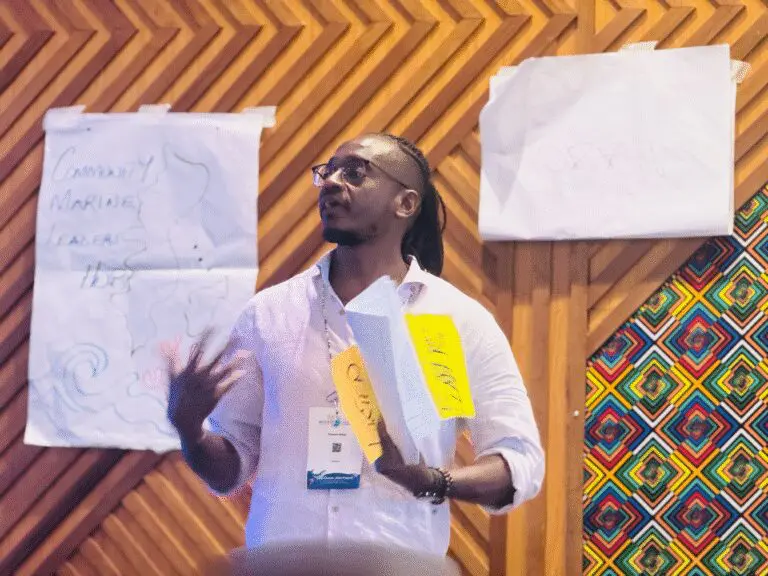
When AMCLP alumni and other marine organizations met online in January 2025, they recognized that WIOMSA, the region’s most influential marine platform, had long been a space where science dominated the conversation. While initiatives at previous symposiums had begun to incorporate community perspectives, this network saw an opportunity to go further and create a space led by communities themselves.
That shared vision came alive a month later at a planning workshop in Diani, where AMCLP alumni and partners – Mwambao, COMRED, LaMCOT, Action pour l’Océan, Reefolution, Bahari Hai, and others – as well as Kenyan fishing community leaders, gathered to design how to shift power in practice.
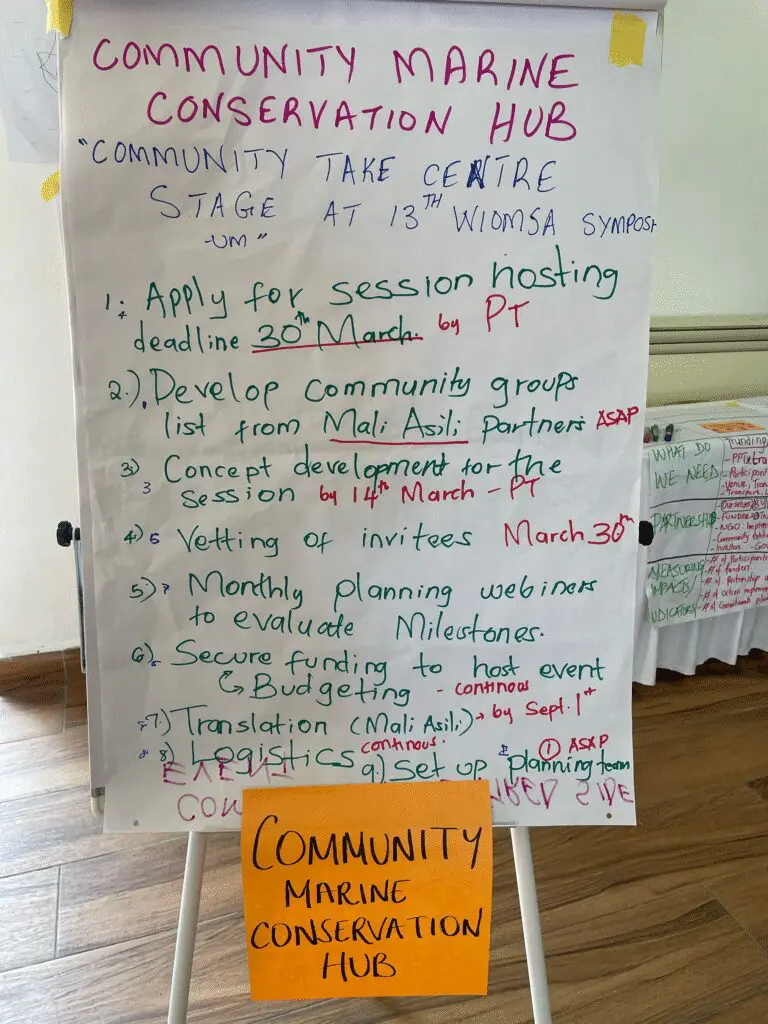
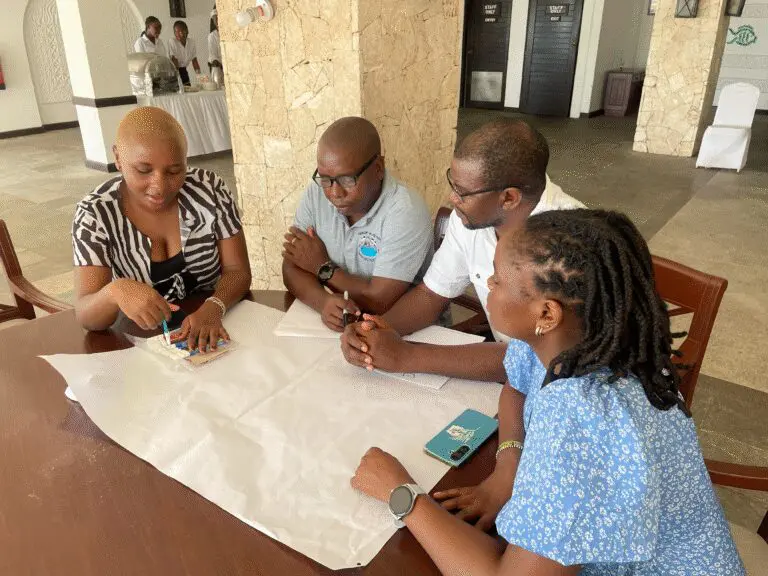
Sticky notes covered the walls as they mapped ideas: creative storytelling, youth engagement, fisher-led science, and community data sharing. What emerged was a bold plan to make WIOMSA 2025 more inclusive, participatory, and grounded in community realities.
Out of that process came three joint initiatives:
“Collective impact means documenting Indigenous knowledge and complementing it with modern science to come up with agreed solutions for better fisheries and sustainable conservation,” explained Gola Mohamed Juma. His work at Mwambao Coastal Community Network supports more than 50 coastal communities across Zanzibar and mainland Tanzania, representing over 25,000 people who manage reefs, fisheries and mangroves.
More than just logistics, these collaborations were a testament to what trust can build. As one partner reflected, “This was a great idea, carving out organizations with like-minded goals to come together. It should be a permanent feature of WIOMSA Symposiums.”
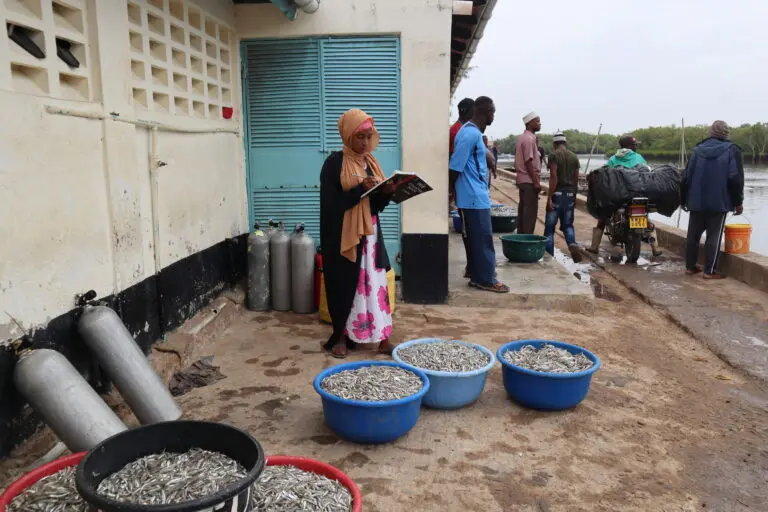
Marine conservation organizations across the WIO are reimagining what ocean stewardship looks like by centering local people in their work. In Tanzania, Action for Ocean has protected 8,000 hectares of mangroves under long-term conservation, combining blue carbon initiatives with livelihoods that benefit nearly 10,000 people. Sea Sense has protected 22,000 turtle eggs and guided 16,000 hatchlings to sea, all while restoring mangroves and turning former poachers into conservation champions.
In Kenya’s Kilifi County, Bahari Hai is inspiring a new generation of marine conservationists through youth-led conservation and education programs that have reached over 2,000 students and coastal youth. Meanwhile in Mozambique, AMA (Associação do Meio Ambiente) is restoring mangroves and seagrass meadows that protect coastlines, store carbon and sustain artisanal fishers, proving that caring for the ocean and improving livelihoods go hand-in-hand.

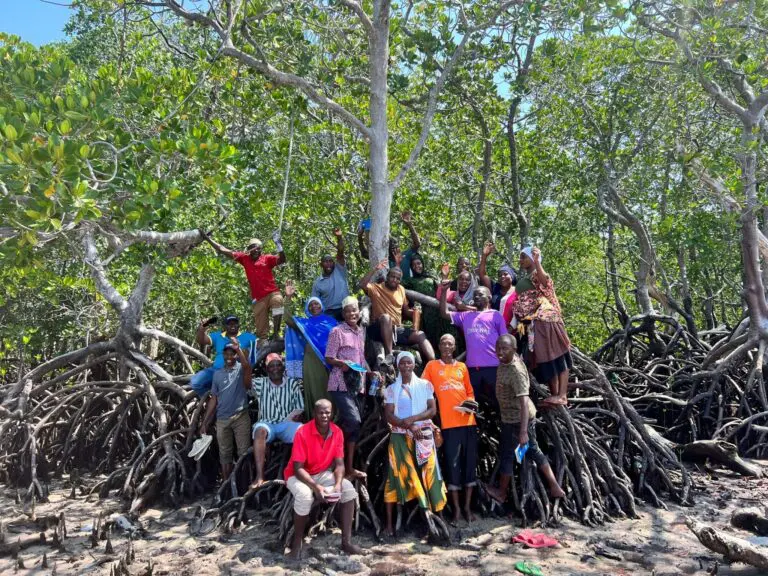

For the community leaders who travelled to Mombasa, the symposium wasn’t just another meeting – it was a moment of recognition.
“When I finished high school, my uncle, who was in the fish business, brought me into the trade,” says Ahmad Omar Said, secretary of the Mayungu Beach Management Unit (BMU) in Kenya’s Kwale county. “I became engaged not only as a fisher but also with a turtle conservation group. Now I work to bring in more community members.”
From Lamu, Ibrahim Masuo, the chair of Bandari BMU that works closely with LaMCOT, described what’s at stake. “As a crab fisher, the mangrove habitats we rely on have deteriorated due to logging. Many fishers face daily difficulties accessing fishing grounds with lower catches.”
Yet his community is leading the response. “We rely on Indigenous knowledge, which is also science,” Masuo said. “We sensitise fellow crab fishers to care for the burrows and rebuild them for crabs to recolonize.”
Their words carry the power of experience, proving that conservation is not something done for communities, but with them. “Traditional knowledge is also valuable,” Ahmad added. “We have to respect and apply it if we want to be successful in conservation.”
Women are also at the forefront of this shift, shaping a more resilient and inclusive approach. Joan Momanyi, Managing Director of CORDIO East Africa and a Lead Up alumna, believes that women’s leadership is the key to lasting change.
“Communities have always been the custodians of resources. Modern science should complement Indigenous knowledge because, in many instances, they align. The Community Marine Leaders Hub is facilitating this connection.”
She added, “When women are involved, conservation becomes inclusive – and when inclusivity is a value, trust is achieved because all voices are on the table.”
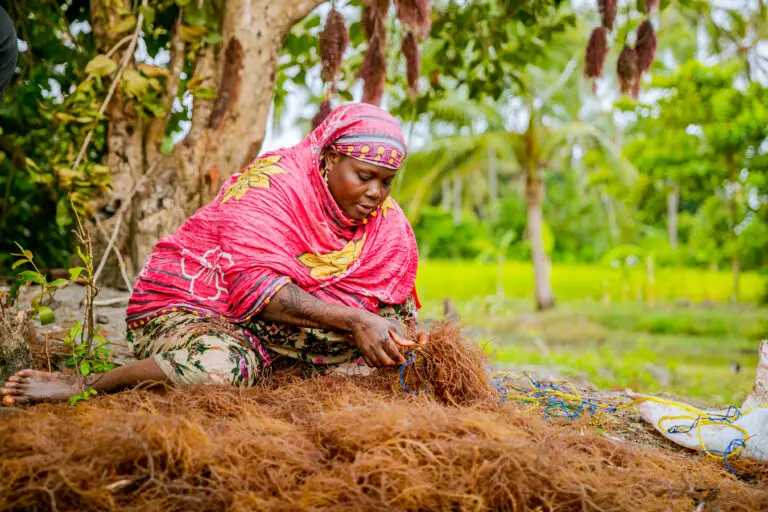
Gender equality is shifting slowly in many places along the seascape. In the Comoros Islands, Women are gaining influence. Dahari’s fisher associations have seen women rise to leadership, making up 70% of local resource managers and community monitors. In Kenya, COMRED’s eco-credit scheme is giving women access to finance and opportunity – issuing over 1,700 micro-loans and providing training for fish processing and trading to grow marine-based businesses sustainably.
By October, what began as a shared idea had become a movement. The Community Marine Leaders Hub turned into one of WIOMSA’s most inspiring sessions – a vibrant day-long experience where fishers, youth and community representatives took the stage to share lived experiences, lessons and hopes for the ocean’s future.
Marine organizations presented side by side, amplifying each other’s work. Over 70 leaders and allies came together for a networking cocktail that broke silos and forged new relationships. “It ensured inclusivity because community members were engaged and our voices were heard,” said one participant.
The Hub itself was designed as a learning space, not a panel – structured around storytelling, dialogue and creative co-design rather than formal presentations. Fishers shared how traditional knowledge guided their practices; poetry, art and theatre reflected community resilience; and scientists joined group discussions to co-create ideas for inclusive conservation models. Each interaction built understanding, showing that when knowledge flows in all directions, stronger solutions emerge.
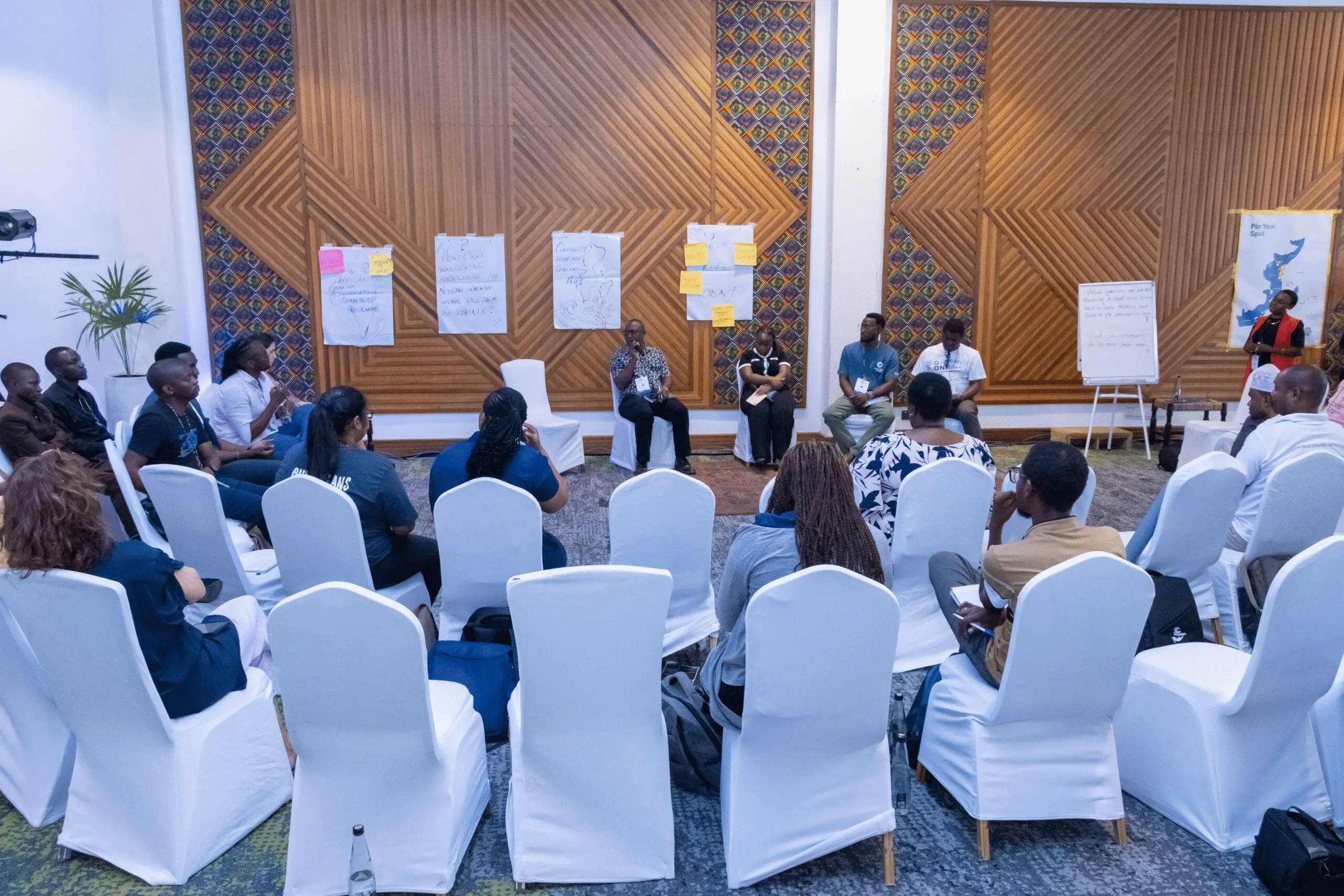
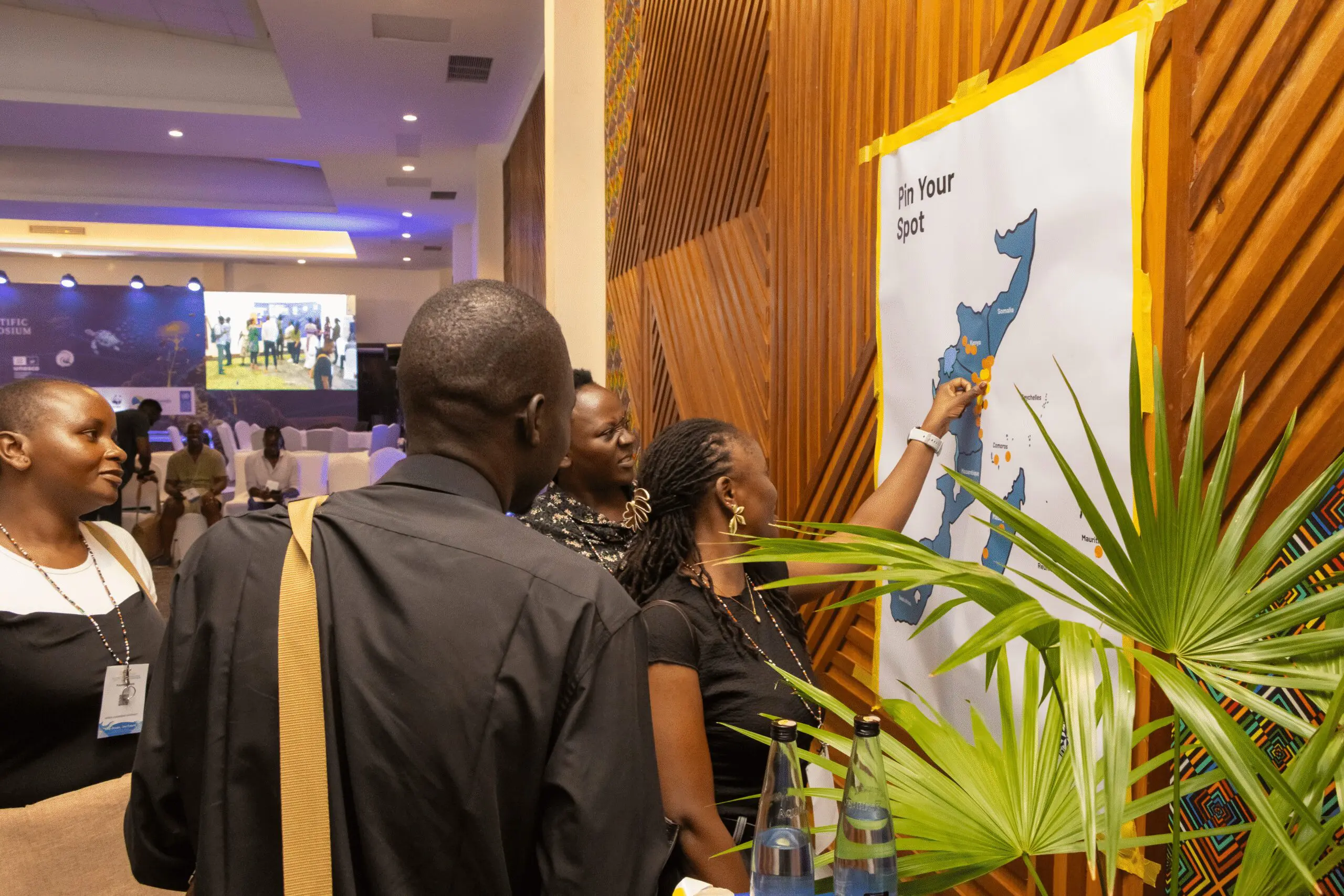


Importantly, the Hub connected local action to global frameworks – including the Nairobi Convention, African Blue Economy Strategy and the Post-2020 Global Biodiversity Framework – positioning community leadership as central to regional governance and climate goals. Among the outcomes were calls to formalize community participation in marine governance, ensure that women and youth have decision-making roles, and establish a regional financing mechanism to channel more resources directly to community-led conservation.
The success of the day also reflects WIOMSA’s growing commitment to inclusion – recognizing that the future of marine science depends on meaningful collaboration with the people live and work closest to the ocean. By opening its doors to wider community leadership, WIOMSA has set an important precedent for how scientific convenings can evolve into platforms for shared learning and collective action.
For many, this collaboration illustrated something bigger: when leaders convene around shared purpose, they can move entire systems. The trust built through AMCLP became the foundation for a new model of collective impact, one that will continue shaping marine conservation in the region.
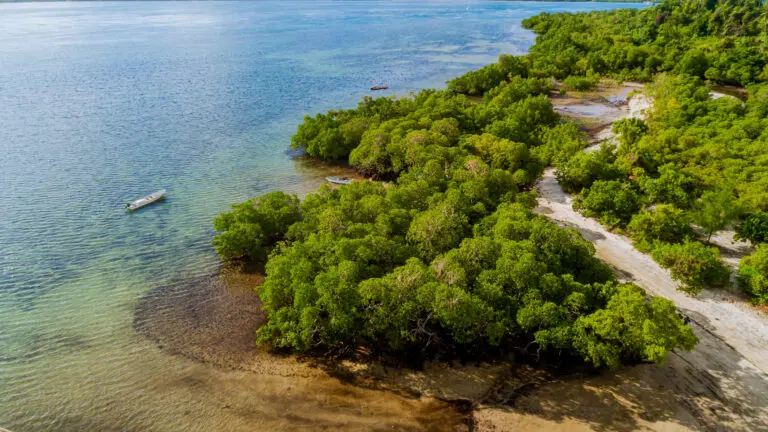
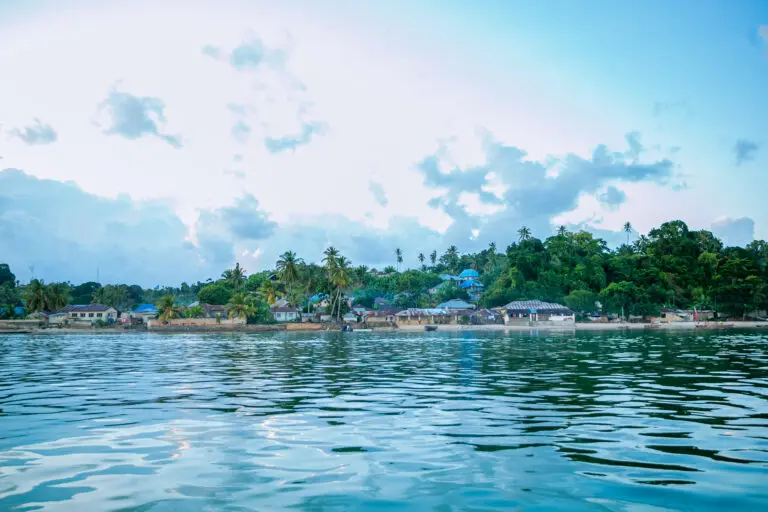
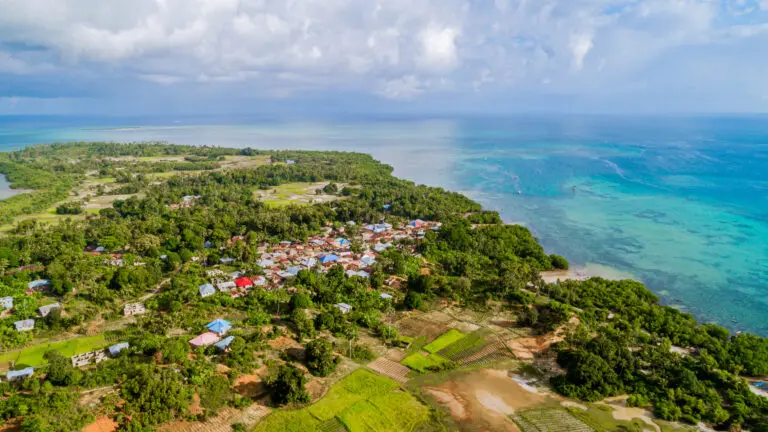
The Journey to WIOMSA doesn’t end in Mombasa – it’s only the beginning. Energized by the success of this year, the same partnerships that made this moment possible are already thinking about what’s next, including a Marine Leaders Network that will sustain collaboration and joint action to ensure a powerful community presence at regional events.
From youth groups to fisher associations, women’s cooperatives to blue-carbon projects, these organizations together form a living network of local leadership. Collectively, they support the protection and co-management of more than 200,000 hectares of reefs, mangroves and seagrass beds; engage tens of thousands of coastal residents; and are pioneering new pathways for sustainable livelihoods, education and climate resilience.

“The health of our ocean is the link that connects us as a region, and it’s the strength of our communities that keeps that link unbroken. When we connect people, align our policies, and share our data, we move beyond conservation to collective stewardship,” said Catherine Nchimbi, Senior Portfolio Manager at Malasili. “A united ocean community doesn’t just protect the sea; it secures our shared future. WIOMSA created a space where we were reminded that without the community, the ocean cannot thrive.”
This is the future of marine conservation: communities leading, science listening, and the ocean thriving – not because of one organization, but because of all of them, working together.
Nos dernières actualités et opinions
Des histoires inspirantes de notre équipe et de nos partenaires
Notre travail présenté dans des médias externes
Des mises à jour régulières de notre équipe et de nos partenaires