
When we use the word “brand” with conservation leaders, we often see a slight wince. It sounds corporate. Shallow. Like something that belongs in a marketing agency, not in the field. But brand, at its core, is simply the answer to a question every funder, partner, government official, and community member is already asking: Who are you, and can I trust you?
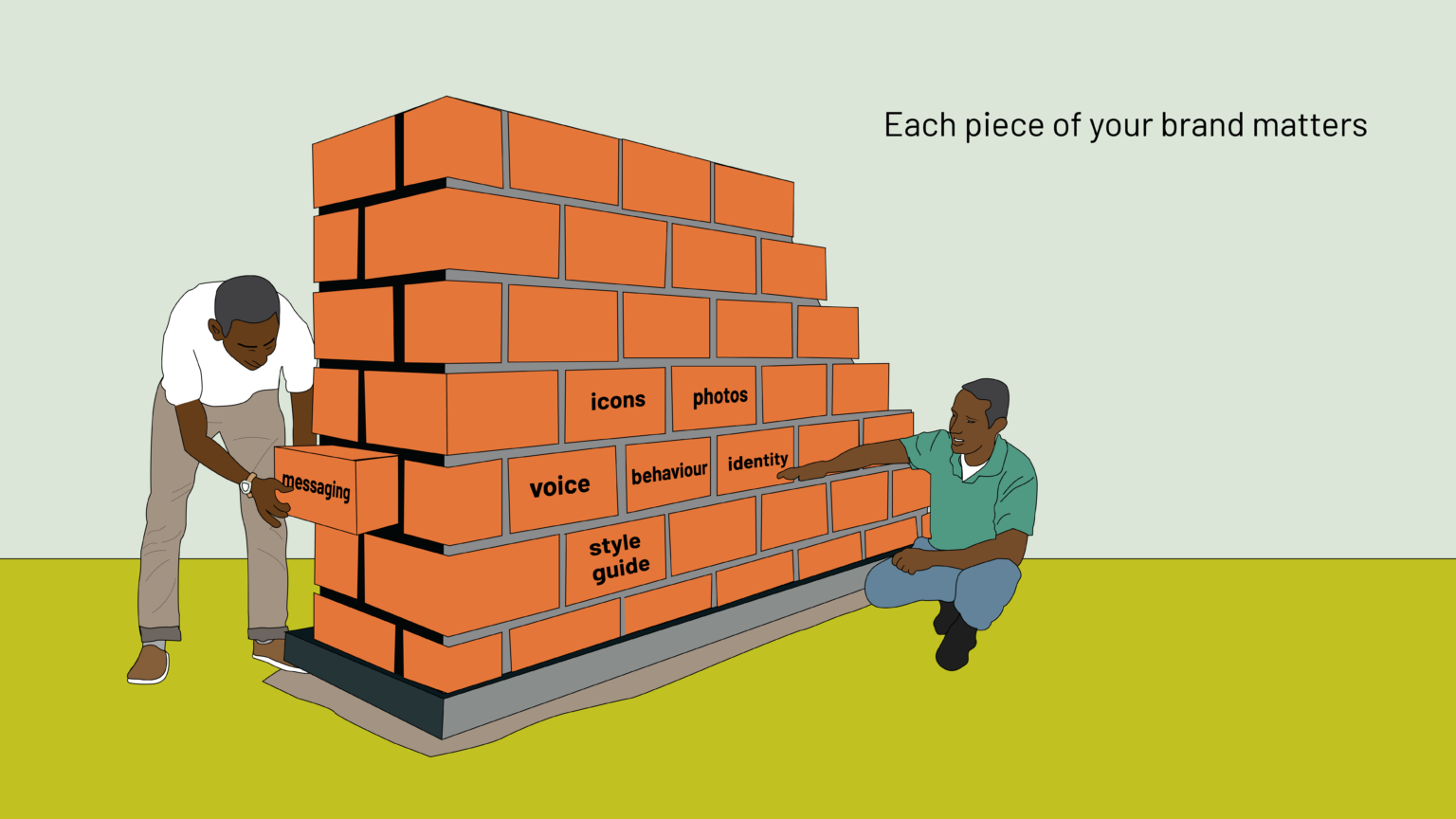
Imagine a programme officer who works at a conservation funding foundation. She has just finished a meeting and has twenty minutes before her next call. She opens her laptop and searches for one of the organisations that she saw had applied for funding. She had heard about one of their community leaders from a colleague who said they are innovative and deeply trusted by the community. She had met one of the field officers at a training and they asked great questions and were engaged the entire time. So when she saw their proposal, she put it on the top of the pile. The website loads slowly. The logo looks different from the one on the proposal. The “About Us” page describes a strategy that ended three years ago, and the photos are blurry. A brochure she downloads uses a different name for the same programme. She closes the tab, opens the next application, and moves on.
This isn’t a story about bad work. It’s a story about the need for consistency across touchpoints, about underinvestment and different priorities – and it happens more often than most leaders realise.
When we use the word “brand” with conservation leaders, we often see a slight wince. It sounds corporate. Shallow. Like something that belongs in a marketing agency, not in the field. But brand, at its core, is simply the answer to a question every funder, partner, government official, and community member is already asking: Who are you, and can I trust you?
Your brand is not your logo. It’s the consistent identity your organisation projects across everything it does – your name, how your team describes your work, the quality of your reports, the photos you share, the tone of your emails, how you run your workshops and community meetings, and yes, your logo and visual identity too. When all those things are coherent and consistent across your team, people trust you faster. When they’re inconsistent, people hesitate – even if your conservation outcomes are exceptional.
For small organisations with limited staff and stretched budgets, this matters enormously. You rarely get a second chance to make a first impression, and you almost never get to be in the room when that impression is formed.
You have a brand, whether you like it or not – better to take control sooner rather than later.
We see the same pattern repeatedly. Teams doing genuinely important work – community members conserving critical habitat, locally-led conservancies building resilient livelihoods – but their external presence tells a fragmented story. Photos of the ocean when they focus on reforestation. A name or logo that appears three different ways across their documents. No clear description of where they work and why. Photos that are dark, blurry, or generic. No clear, consistent sentence that explains what they do and why it matters.
None of these things reflects the quality of the work. But all of them shape how the work is perceived by people who haven’t seen it firsthand – which is most of the people your organisation needs to influence to improve your funding and broader recognition. It doesn’t need to be flashy – in fact, your visual identity done well should really reflect your organization’s culture and mission, to proudly represent who you are and why you do what you do.
Inconsistency also creates internal costs. When staff can’t find the logo file, they create their own version. When there’s no agreed description of the organisation’s mission, every proposal introduces it differently. When there’s no designated person to approve external communications, quality varies and usually suffers. Over time, these small slippages add up to an organisation that looks and feels less professional than it actually is.
Here’s the good news: building a coherent brand doesn’t require a huge budget or a communications team. It needs to come from the heart of your organisation. It requires clarity, leadership, consistency and a small set of foundational assets that everyone in your organisation knows, uses, and can find.
The key is to focus on getting one step fixed at a time. There are many designers that can help you with this, including us – so please reach out if you would like support.
Alongside the assets, you need two things that are often overlooked: a shared place to store them – a Google Drive or Dropbox folder accessible to all staff is enough, or if you run a larger, more complex organisation regularly producing designed outputs, a Digital Asset Management system might help.
Secondly you need a designated person whose role includes reviewing external outputs before they go out. This doesn’t have to be a full-time communications role – it can be a leader, part of a team member’s role, or even a trusted external partner. But someone needs to hold the standard.
“Working through our rebranding process gave us the structure to articulate what we already knew about ourselves but hadn’t yet put into clear language. The result is an identity that feels genuinely ours, one we can stand behind as we continue building the case for community-led marine conservation in Tanzania.”
– Javis Bashabula, Comms Lead Action for Ocean, Tanzania
A strong, consistent brand does more than make your organisation look professional. Over time, it builds the kind of institutional recognition that opens doors. Funders remember organisations whose communications are clear and consistent. Partners are more likely to recommend you. Journalists are more likely to reach out. Government officials are more likely to take your meetings.
For community conservation organisations specifically, there’s another dimension: a strong brand signals permanence and seriousness to the communities you work with. Community members will remember your organisation even if your team changes. It says this organisation has roots, stands for something specific, and will still be here long into the future.
Brand is built through repetition – showing up the same way, telling the same story, using the same name. But it starts with the basics, and the basics are within reach of every organisation, regardless of size.
Most organisations don’t decide to refresh their brand. They drift into the realisation that they need to – usually when something exposes the gap between how they see themselves and how they appear to others.
Here are five signs worth paying attention to.
Take 15 minutes to gather your existing assets and make a list of gaps you need to fill.
Articulate who you are so your team understands what they represent.
Put your assets in an easy-to-access place.