More fundraising won’t fix your fundraising: What to do instead →

Why does fundraising feel so hard for many nonprofits, even when the work is strong? Why does it continue to keep so many of us up at night? Why does fundraising feel so hard for many nonprofits, even when the work is strong? Why does it continue to keep so many of us up at night?
Recently, our CEO, Fred Nelson, hosted a live conversation with Kevin L. Brown, founding partner & CEO of Mighty Ally, joined by the Maliasili team and more than 160 leaders across our community.

février 27, 2026

Why does fundraising feel so hard for many nonprofits, even when the work is strong? Why does it continue to keep so many of us up at night?

Recently, our CEO, Fred Nelson, hosted a live conversation with Kevin L. Brown, founding partner & CEO of Mighty Ally, joined by the Maliasili team and more than 160 leaders across our community. Kevin is the four-time bestselling author of Fundable & Findable, and regularly shares practical insights with his 100k+ followers on LinkedIn, offering advice and tips that make fundraising feel more achievable for nonprofit leaders around the world.

In this candid and energizing exchange, Fred raised the questions many conservation leaders continue to wrestle with. Kevin responded by taking us deep into the Fundable/Findable FrameworkTM, challenging assumptions and offering a clear, strategic, and accessible way forward.

Too many nonprofits are unseen, unheard, and underfunded.

Fred: Tell us about your journey. What led you to co-found Mighty Ally and write Fundable & Findable?

Kevin: Too many nonprofits are unseen, unheard, and underfunded. The world is full of organizations doing some of the most impactful work, but they just can’t bring in enough revenue to grow.

For me, the co-founding of Mighty Ally was both professional and personal. While living in Uganda, I saw countless civil society organizations doing incredible work, but when it came to funding, there was still a barrier. That was really the impetus for Mighty Ally. There are a lot of solutions to this problem, but one of the big ones we saw was around being fundable and findable, building your brand, having great communications, and recognizing that all of that has to precede fundraising.

We wrote the book because even with our consulting practice and LinkedIn content growing, we wanted to make this framework as accessible as possible. This book is part of our own nonprofit mission. We want scale to happen without us being in the room.

More fundraising can’t fix your fundraising. Fundraising is also not a money challenge.

What have we been doing wrong as a sector when it comes to fundraising? Both in how we think about fundraising and how we pursue it?

We rely so much on fundraising – grants, donations – that it becomes the number one thing that keeps us up at night. So we attend fundraising workshops, hire fundraising consultants, apply for awards, seek funder meetings, build prospect lists. It becomes the fundraising chase!

What we say at Mighty Ally is: it’s not working. Most nonprofits are still unseen and underfunded. So if it’s not working, we can’t keep going about it the old way, chasing donors. More fundraising can’t fix your fundraising.

Fundraising is also not a money challenge. Foundations alone for example, have enormous assets sitting in the bank. If the money exists and the work exists, then what’s the barrier?

That’s why we introduce this concept of being fundable and findable. Build your brand first. Then go after funding. Fundraising is important, but it comes second. It’s not the first thing you do. We, as a sector, often miss that first valuable step.

The 4 steps to becoming fundable and findable.

So what are the fundamentals of becoming fundable and findable? Where do organizations and leaders begin?

The number one thing people come to us for is a communications challenge. Maybe their website isn’t good, or the pitch deck isn’t landing. But that’s the fourth step in your journey.

To be fundable and findable…

  • The first step is developing a clear theory of change. What’s the problem you’re solving? Why do you exist? What do you do? Where are you going? That upfront clarity is the very first step of your fundraising journey.
    • The number one complaint we hear from donors is that they just don’t understand what you do. It’s not about scale or innovation. They want to understand what you do, why you exist, and who you serve.
  • Then comes your strategic plan. Funders want to see that you have the pieces in place to pull off your vision. Your strategic plan is part of your brand. It’s part of your fundraising engine.
  • After that, you can focus on your positioning strategy. Once you’re fundable, once you build that clarity and donor belief, now you have to occupy a distinct space in the funders’ mind. You have to find your niche; that’s positioning.
  • Marketing communications. Then you can get to communications – your website, messaging, pitch decks and more.

This framework holds true across organizations of any size and budget.

What you’ve described above, and the ideas in the book, how do they relate to organizations in Africa – grassroots, local – where there are a lot of questions around culture, geography, language, etc.? Are these principles still applicable to them?

The main question we often get is, “Does this apply to us? We’re small.” What we find is that many organizations aren’t necessarily small; they’re average. In the book, I mention how 88% of nonprofits operate on less than $500,000 per year, and only 3% will ever break $5 million a year.

So yes, this book, the framework, the ideas all apply to local organizations, and these are the types of organizations we choose to primarily work with.

You have a brand, whether you like it or not.

Let’s dig into your concept of brand, because it’s something you really emphasize in your work and in the book. It feels distinctive. You have a quote early in the book: You, as an organization, have a brand whether you like it or not. The only choice you have is how actively you want to shape and manage that brand.

What do you mean by brand, and how does it sit at the centre of communications, fundraising, identity, and messaging?

That quote is the first one in the book for a reason. It comes from Ingrid Srinath, a philanthropy leader in India who also wrote the epilogue for this book. Her quote really captures how we think about brand. Many leaders in the social sector are uncomfortable with the word. It can feel capitalistic. It can feel competitive. It can sound like design and visuals. But that’s not what we mean.

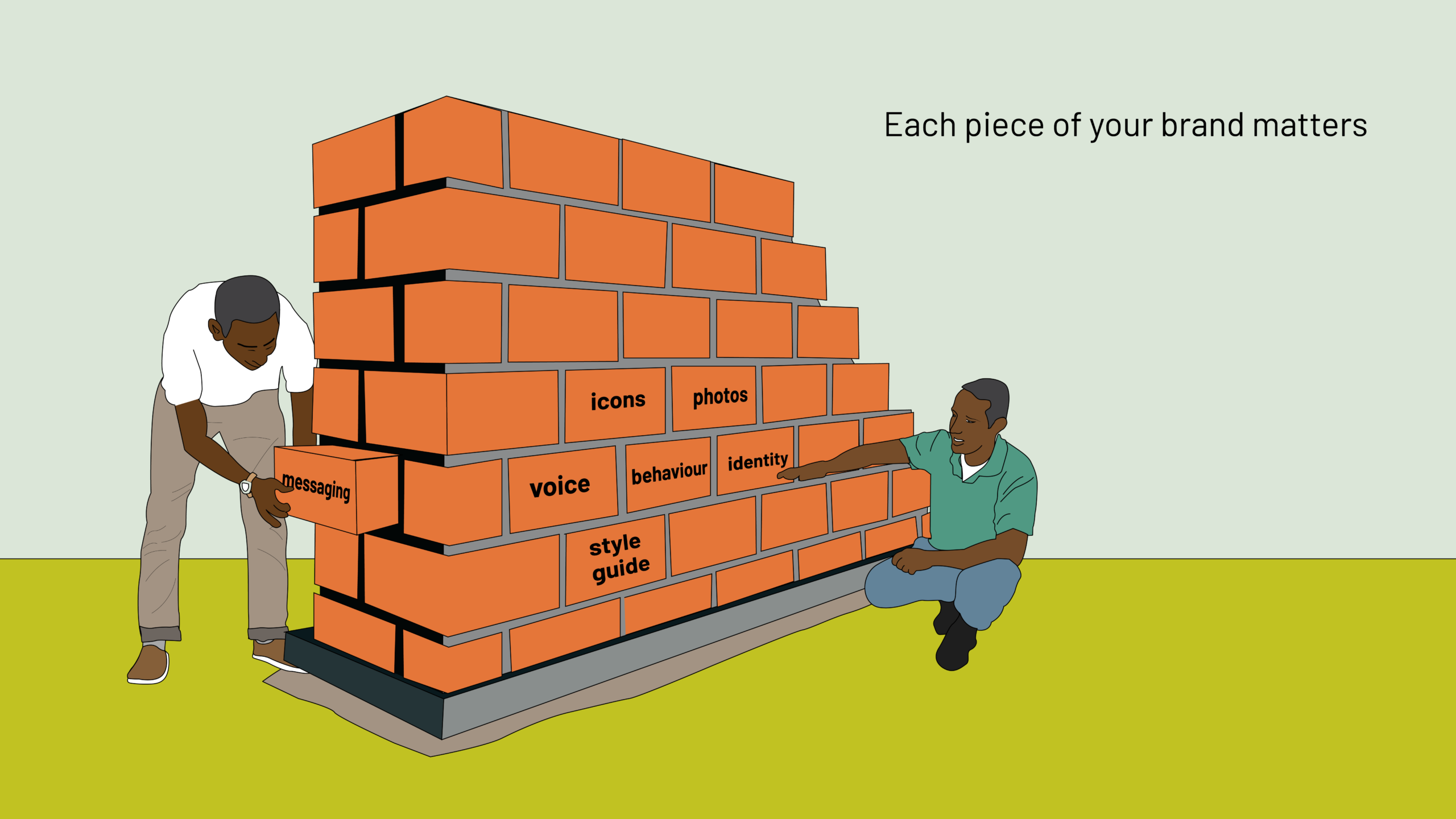
Brand is your core identity. It’s who you are. Just like a person has an identity, every organization does too. You have a brand whether you’re managing it or not. Your brand is what people think about when they hear about you. What they feel.

What we’ve tried to do with this Fundable/Findable FrameworkTM is demystify the concept of brand. Yes, the concept has roots in the private sector, but that doesn’t mean it has to feel foreign or uncomfortable in this space.

That’s why we talk about being fundable and findable. That’s all building a brand really means. Being clear enough to be fundable. Being visible enough to be findable. If you don’t like the word brand, call it an identity. But do the work. Whether you embrace it or not, you already have one.

The work alone is not enough. You have to speak about it.

One word we’ve really come to love, and that connects closely to this idea of brand, is authenticity. It has become central to how we think about communications.

When I look back, many of our early conversations as Maliasili with partners included a resistance to communications. There was a feeling that it was inauthentic. That it was something the big international NGOs and corporates did. That it felt like marketing rather than real work. The thinking was: strong local organizations just do the work.

But as you’ve clearly stated, you have a brand whether you choose to communicate or not. You can decide not to talk about the important work you’re doing, but you will still have a brand. It may simply be one that nobody knows about, and one you have no control over.

I agree. Sadly, the work alone is not enough. I wish it were. If impact alone automatically attracted funding, there would be volunteers and money everywhere.

But that’s not how the sector is built. There are deep structural challenges, power dynamics, and broken systems. Because we rely on grants and donations, we have to communicate about our work.

Communications does not mean being flashy or promotional. It means being clear, intentional and focused. A clear website so that when donors check you out, they understand what you do. A clear pitch deck so that when you meet partners, you can explain what you do and how you’re different.

This is not about viral campaigns or big stages. It’s about clarity, consistency, and routinely reaching the right audiences the right way.

Start with the communications basics.

If resources are limited, where can organizations realistically begin? What are the most essential communications elements to put in place?

Again, you don’t start with being findable. You start with being fundable. Even if you think you’re clear, double-check. Make sure your theory of change is clear. Make sure your strategic plan is clear. I’ll give talks like this one today, and the first question I still get is, “Which social media channel should we be using?” That’s visibility. That’s findable. But clarity comes first.

There are countless channels you could use. Large organizations might leverage all of those. Most small organizations cannot.

So start with a few fundamentals.

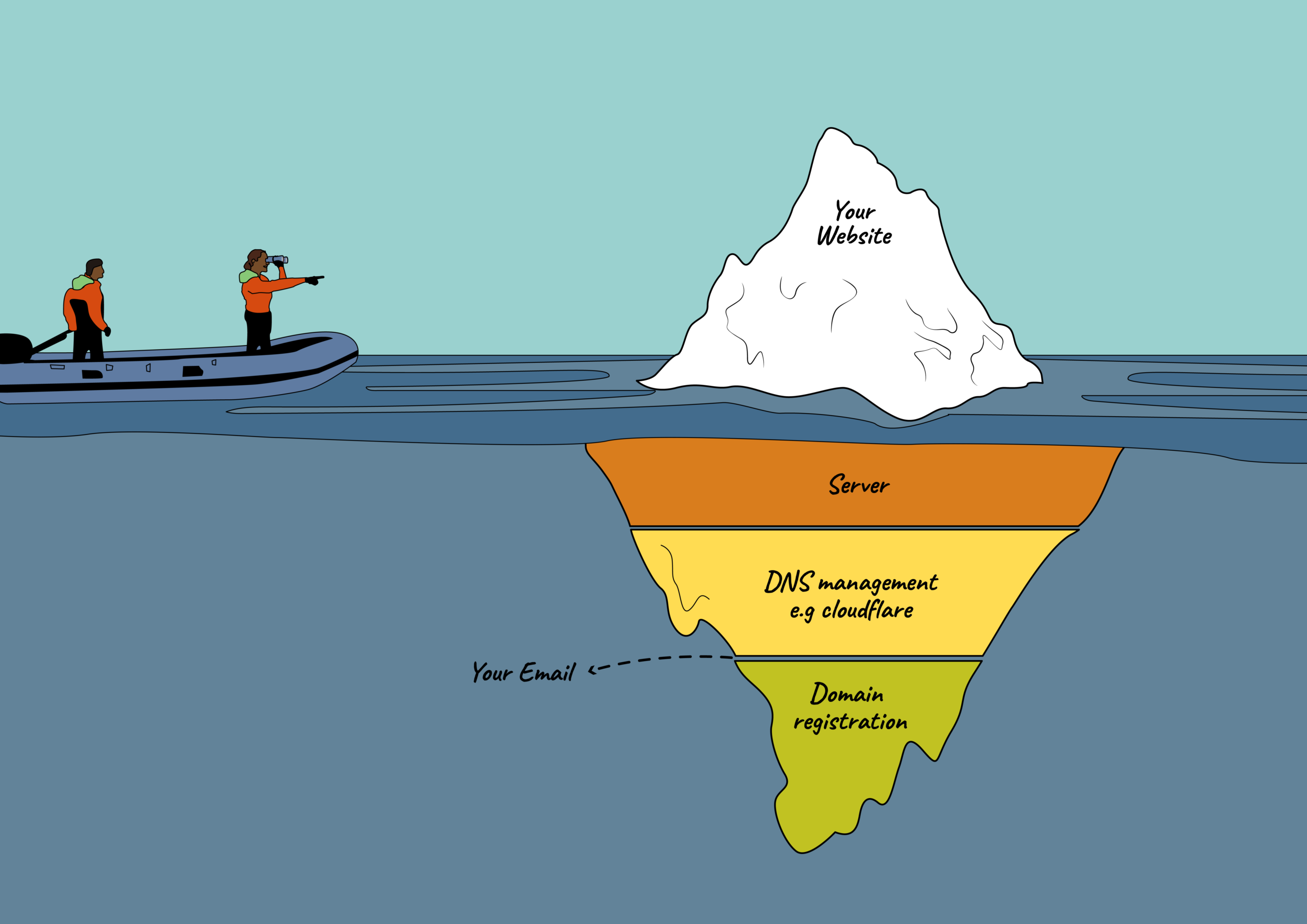
  • Your website. It is still the number one brand channel and findable channel almost every donor, partner, or government official will check. It cannot be an afterthought.

  • A clear pitch deck. This can be 10-15 slides that explain who you are, what you do, and how you’re different. You can use it with donors, partners, even community stakeholders.

  • An email newsletter. Many overlook this while chasing social media visibility. But the return on investment for email is consistently higher than many flashier channels. Even podcasts and stages often do not deliver the same steady value as a simple, consistent newsletter.

  • A basic elevator pitch that everyone on your team can repeat. Whether you are 5 people or 50, every staff member becomes a brand touchpoint. When everyone communicates the same clear message, it creates a ripple effect outward.

Don’t worry about viral campaigns or big speeches. Start with the basics. Clarity first. Then consistency, which is key. Most audiences need to see your message several times before it sticks. Leaders and good communicators are repeaters.

Treat communications like a science. Consistently test, experiment, and learn.

When it comes to communications, there’s no perfect formula. There’s no single recipe that works for every organization. You have to figure out your mix: when you’re communicating, where you’re communicating, and how you’re communicating. I always compare this to a science, not an art. Think about art. You make a painting, you hang it on the wall, and it’s done. Brand building, communications, and fundraising don’t work like that.

You start with a hypothesis. You have a theory. Then you test it. You’ll make mistakes. But through testing, you begin to find the right mix.The real challenge is intersection. You need the right message and the right audience, and they have to meet. You might be putting the right message into the world, but if it’s reaching the wrong audience, it won’t land. Or you might be targeting the right audience, but the message isn’t quite right. It’s just like your products and programmes. In conservation, you’ve been testing, experimenting, learning, and using monitoring and evaluation for years to refine your approach. Communications requires that same discipline. It cannot be something you do on the side.

So treat it like an experiment. Try this message with this audience. Watch what’s working and what’s not. Take the pressure off getting it perfect. You’ll make mistakes. Over time, you’ll find what works.

As a leader, you can’t outsource your brand.

One of the challenges many people we work with face is how to invest in this work. We’ve been hearing a lot of questions around staffing. How do you staff communications and fundraising internally? Does outsourcing work? Should teams look for part-time fundraising staff in the US or Europe? Where do you start, again when you have limited resources?

I’ll give you a slightly contrarian answer. If you’re a leader, founder, or Executive Director and you’re thinking, “Okay, I get this, now I just need to hire a team to handle brand and comms,” that’s actually the wrong way to think about it.

We, as leaders, own the brand. We own what it takes to be fundable and findable. I’m not saying you have to do all the work yourself. But it has to be owned at the leadership level. As a leader, you cannot ‘outsource’ your brand.

If you treat it as something you can outsource entirely, you’ll never quite get it right. I often compare it to personal identity. We all went through that phase in life where we had to figure out who we were at our core. You would never outsource that. You wouldn’t ask someone else to decide your identity for you.

It’s the same for an organization. Leadership has to own the theory of change. Leadership has to own the unique position.

After you’ve done that foundational work, then yes, build a team. Most nonprofits are small, and it can feel hard to invest in communications or fundraising capacity. I would argue that, in many cases, the money is there. It’s a question of priorities. If you’re five people, everyone wears multiple hats. But if you’re fifty people and no one is dedicated to brand or communications, that’s likely a resource allocation issue.

Clarity starts with leadership. Capacity can follow.

Your mission needs a messenger.

The personal brand is powerful. I shared recently that while Mighty Ally has a strong brand, my reach as a person is actually bigger. It’s the same mission and the same message, but people follow people. They don’t engage with company pages the same way they engage with other people.

There’s no way to work with me outside of Mighty Ally, but the data shows something important: people connect with a person first. So don’t hide behind your logo. Your mission needs a messenger or messengers.

A company newsletter or website alone can’t carry all the weight. Find someone to be that main mouthpiece.

I’ve never been comfortable with the idea of “selling.” I don’t sell myself, and I don’t sell Maliasili. What I do is speak with clarity, passion, and genuine enthusiasm about the work and the impact we’re trying to achieve.

And that works. The way to “sell” your organization isn’t to exaggerate or perform. It’s to be clear about what you do, grounded in why you do it, and confident in the value of the work. Getting funders to the field also matters. It’s where they can truly understand the work and care about the place you’re working in.

I agree. It’s important to note that thought leadership doesn’t mean posting constantly on social media or standing on big stages. There are many ways to lead: hosting community gatherings, commenting on posts thoughtfully, being a guest on podcasts, meeting government leaders. As Fred says, it’s not about selling yourself. It’s about talking clearly about your work.

Most of us love what we do. This is about finding the right audiences, being clear about what you do, and communicating it with conviction.

The board’s role in fundraising.

How do you see the role of the board in fundraising? Where can they add the most value, and what are reasonable expectations?

In the book, I talk about the idea that every voice is a funding force. We often hear the phrase “everyone is a fundraiser,” and many people push back. An M&E lead might say, that’s not my job. An operations director might say the same. A board member might say, I’m here to oversee finance or governance, not to fundraise.

But every one of us is communicating about the organization. That includes the board. I borrow a simple framework from Kay Sprinkel Grace called AAA. Each board or team member plays one of three roles: ambassador, advocate, or asker.

Only a few people are actual askers, meaning they directly ask for money. The rest serve as ambassadors or advocates. They build relationships, speak about the organization, and strengthen the brand. When you frame it this way, board members get invigorated to help with fundraising. But if you ask people to just go out and ask for money, many of us will say no. It’s about reframing. In fundraising, very little of it is about asking for money.

The power of peers.

In terms of being findable, what role do peers play? We’ve found that the best way we become findable is through trusted peers who really get what Maliasili is all about. From the early days, many of our new funders have come through peers. How do you see that peer dynamic playing out?

What makes peer referrals possible is clarity. When what you do is clear, and what makes you unique is clear, you’ve found your niche. That’s why your peers refer you to potential funders, and you, in return, refer them. Each of you knows exactly where you stand and what you offer.

When that clarity isn’t there, then yes, there’s a lot more competition. And I know people don’t like that word. But without a clear niche, organizations begin to overlap, and referrals become much harder. For us, we’re constantly sending work to allies, and they send work to us. That referral network only works when people know what you do and how you’re different.

In conclusion, if you take away one big thing from this conversation, remember:

More fundraising can’t fix your fundraising.
To get funding, be fundable and findable.

BUY THE BOOK

You might also like

Get the Reader in your inbox every month →

More of the Maliasili Reader →

Maliasili existe pour aider les organisations locales de conservation talentueuses à surmonter leurs défis et contraintes, afin qu’elles puissent devenir des acteurs de changement plus efficaces au sein de leurs paysages, communautés et pays.

S’abonner à notre newsletter trimestrielle

Inscrivez-vous avec votre adresse e-mail pour recevoir nos actualités et mises à jour.
Nous respectons votre vie privée.

© Maliasili 2014 - 2026

4 Carmichael St, Suite 111-193, Essex Junction, VT 05452

Maliasili est reconnue comme une organisation caritative publique (501c3) par l’Internal Revenue Service.