How to build and manage a board that works →

One of the biggest decisions that an Executive Director or the leadership of an organization has to make is who they recruit to their board. Managing boards is hard work. Primarily, in conservation and in the non-profit world, they’re voluntary groups, and you need capable and talented people who are willing to give their time […]

octobre 10, 2025

One of the biggest decisions that an Executive Director or the leadership of an organization has to make is who they recruit to their board.

Managing boards is hard work. Primarily, in conservation and in the non-profit world, they’re voluntary groups, and you need capable and talented people who are willing to give their time to your organization. As leadership, you also have to invest time in the board processes that enable the board to fulfil its functions effectively.

In this Reader, we chat with our CEO, Fred Nelson, who shares insights on how organizations can recruit the right board members, manage the relationship effectively, and get the most out of it. He draws this wisdom from his experience working with many of our partners on board development and governance, and from engaging with our own Maliasili board.

Firstly, what are the things a leader or a leadership team needs to be thinking about when it comes to creating or recruiting an effective board? What questions should they be asking themselves?

A board is only effective when you’re clear about the specific value you need it to bring, and the role you need it to play. Here are some examples of the roles a board should serve:

✅ Governance
A board’s primary and most important role is the governance of an organization. This includes overseeing the CEO specifically (or multiple executives in a shared leadership structure). When I was setting up my first board, I was clear that I wanted a board that could fire me if I needed to be fired. As leaders, we need to recruit board members whose judgment and strategic decision-making we can trust and who will hold us accountable for our performance

This becomes especially important during critical organizational transitions – such as when an Executive Director or CEO leaves, or when a leadership overhaul is needed. In those moments, the board’s role is absolutely vital. When you don’t have a capable board, the organization is placed at real risk.

As a leader, you want people who can challenge you, hold you accountable, and help you see what you might miss, not just those who agree with you. A strong board safeguards the mission by ensuring the leadership stays focused, ethical, and effective.

✅ Thought leadership and mentorship
Board members often bring diverse and valuable experiences that can help a team grow. I’ve benefited, and continue to benefit, from the board members Maliasili has been fortunate to have, in terms of my own professional development. I often advise our partners to think of bringing in members who can be thought partners, and act as mentors to the ED/CEO and senior leadership. This really helps to broaden perspectives and support growth.

✅ Stratégie
Boards should ideally help set the organization’s overall strategy to deliver on its mission, including defining its ambitions and the actions needed to execute its goals. Some of Maliasili’s partners have strong boards that are instrumental in providing direction for long-term plans and the organization’s future. A shortfall in many boards of small or young organizations is that the board is often reactive rather than proactive in strategic engagement, and they often struggle to move beyond mere compliance to providing strategic leadership.

✅ Resourcing
The board can play or support in attracting two key resources – people and money. This includes recruiting and retaining key staff, especially the Executive Director (ED) or CEO, promoting the organization, building networks, and sometimes directly sourcing or providing funding. More often than not, a strong board can help add credibility to the organization in the eyes of donors and funders.

2. What should an effective board look like?

The constitution of your board is integral to the members being able to achieve the roles you’ve set out for them.

✅ Composition and skills
A great board brings together the right mix of skills and expertise that an organization needs for a particular stage of growth and journey. This could include financial management, legal and compliance, fundraising, NGO management, communications, and relevant technical expertise.

Local cultural expertise, community representation, and political leverage are often crucial. However, each organization is different, and leaders should think carefully about the needed skills before recruiting board members.

✅ Committees for key functions
An efficient way to get focused input from the board while managing time commitments is to have board sub-committees. Clear policies should guide how committees report back and make decisions. Typical committees can include Finance, HR (recruitment, etc.), and Executive (Chair, Treasurer, Secretary, Vice-Chair). Temporary committees can also help address specific issues, like reviewing an HR strategy or managing a strategic risk, without creating a permanent structure.

✅ Board size
There is no ideal board size, as each organization has unique requirements specific to its context. However, managing boards takes time and real effort, and conservation organizations, to ensure success, should aim to keep boards small and manageable, especially at the beginning. Bring people on board who are motivated to do the job, can dedicate their time and energy, and who have the right way of thinking that is aligned with your organization.

  • Remember that your board chair matters more than you think. This is because they:

    • Foster the culture within the board.

    • Facilitate the board to develop consensus around key strategic decisions.

    • Play a lead role in recruiting other board members.

    • Hold other board members accountable for fulfilling their commitments and their roles.

We didn’t have term limits on our board at the beginning, but over time, it became clear that setting them is healthy and was a natural evolution.

Term limits encourage reflection, for both the organization and the board member, on whether the relationship remains rewarding and productive. Renewable terms or rotational positions can also bring fresh energy and perspectives while giving members a chance to grow and challenge themselves.

Once you’ve recruited a strong board (or have inherited one), how do you ensure that your engagement with them is effective?

✅ Cultivate a strong relationship with your board members, especially between the CEO/ED and the board chair.

You can’t have a strong board without a strong relationship between the CEO/ED and the chair. The board chair isn’t just there to run meetings; they’re a key strategic partner and sounding board for the organization and the board’s leadership. As a leader, you have to invest real time and energy into that relationship: building trust, communicating openly, and making sure you’re aligned on priorities and direction.

✅ Set the right meeting or gathering cadence.
How often you meet, and what those meetings focus on, can make or break your board’s effectiveness. Set a rhythm that keeps your board informed and engaged, but not overwhelmed. Formal quarterly meetings often work well, complemented by shorter check-ins or committee calls in between.

✅ Learn how to conduct well-run board meetings. Here are some of the top tips I’ve learned over the years:

  • Don’t go into board meetings primarily to provide ‘updates’. If you’re spending most of your time giving updates, you’re not using the time together well. Updates should be provided as pre-reads before the meeting so board members come into the discussion informed.
  • You want to spend the board meeting discussing important decisions and receiving input from the members. These should always be strategic, high-level conversations where your board’s expertise can really add value.

  • Prepare the board, yourself, and the leadership team ahead of the meeting. Send out concise and clear pre-reads, share the agenda ahead of time, and as a team, prepare your presentations, speaking points, etc. When everyone is well prepared, the meeting goes more smoothly.

  • When you’re heading into a board meeting where major decisions need to be made, preparation is everything. You should go into the meeting already knowing what each board member thinks about the key issues, so ensure that you have these conversations before the main meeting. This helps you facilitate a high-quality, focused discussion and ensures the board is ready to make thoughtful, informed decisions.

  • Make the board meetings engaging. No one loves to sit through a boring meeting, so facilitate your board meetings in an interesting way.

  • Build connections between the board and the team, beyond the leader.
    You want your senior team to be engaging with the board, not just the Executive Director or CEO. This builds confidence in your board that you have the right team, and helps build and strengthen relationships. You want the board to have visibility of the team beyond the leader, especially for things such as succession planning. In the same vein, leaders should be cultivating the skillset within their team to speak, present, and engage effectively with the board. It’s a critical aspect of leadership development.

  • Ensure that the board has some ‘field time’ to fully grasp your work and its impact.
    Boards make better decisions when they understand the realities behind the reports and numbers. Encourage board members to spend time in the field – visiting program sites, meeting staff and community members, and seeing the work firsthand. These experiences deepen their connection to the mission, build empathy for the challenges teams face, and often ignite their sense of purpose and commitment to the organization.

What are some pitfalls you’ve seen when it comes to working

with and engaging a board?

✖️ A micromanaging board.
Members that get too involved in the day-to-day running of an organization, which dilutes its ability to focus on higher-level, strategic matters. Boards exist to provide oversight and guidance, not to manage operations.

✖️ A disengaged board.

The opposite of a micromanaging board, this type of board is barely present, rarely attends meetings, and shows little genuine interest when they do. This is a warning sign that it may be time to re-evaluate the composition or engagement of your board.

✖️ Recruiting friends and relatives who are unable to serve board functions.
Board members should be able to hold you accountable. If you have members who cannot serve this function, it becomes a problem. Many boards, especially in the early stages, include friends of founders or leaders, but it’s important to ensure they are the kind of friends who can challenge you, guide you, and offer sound advice. Filling a board with family members or close allies who can’t offer objectivity is a red flag.

✖️ Lack of clarity in roles and responsibilities.
When board roles and responsibilities are unclear, members cannot do what they’re supposed to do. Each board member should understand their specific function, what’s expected of them.

✖️ Putting donors on the board solely because of their financial role.
Some boards include funders, and sometimes this works, but often, it doesn’t. You should never put someone on your board just because of money. Values and vision must be aligned, and they must be able to serve the other board roles objectively.

✖️ A board tied to the founder’s identity.
When a board’s existence and functioning are tied too closely to the founder’s identity or leadership style, it can create power imbalances and compromise its ability to hold the founder accountable. Boards should serve the mission, not individual personalities.

✖️ Composition not balanced or lacking key skills.
A board lacking specific expertise, such as financial oversight or legal knowledge.

✖️ Lack of a guiding document.
The absence of a formal board charter or manual outlining functions, roles, and responsibilities.

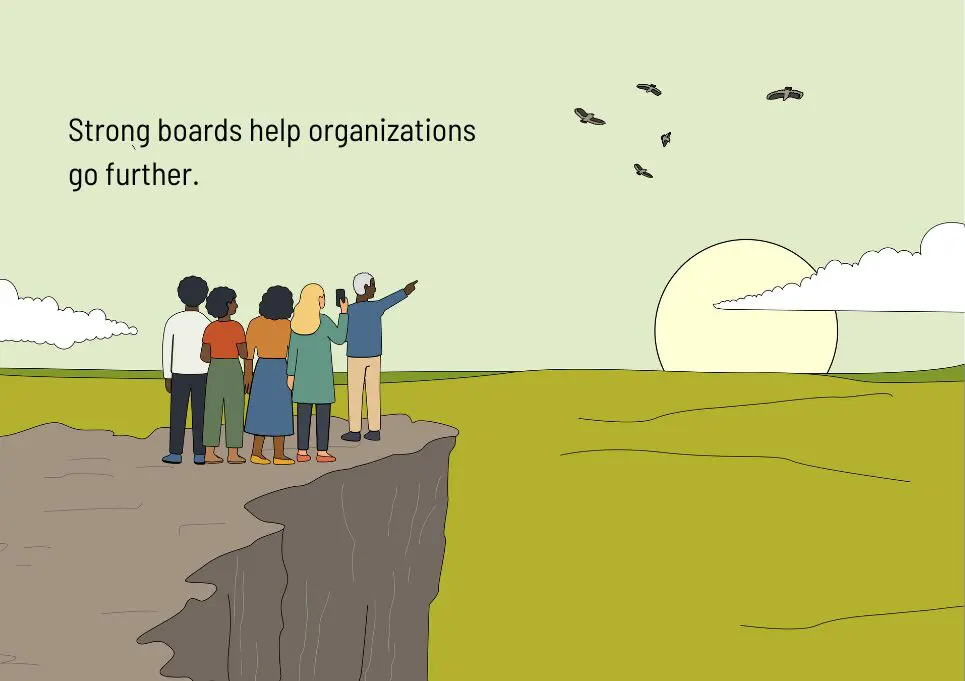
Ultimately, strong boards have role clarity, provide accountability, and carry the philosophy and ethos of the organization.
They understand their purpose, support leadership, and support alignment with the organization’s mission and values. Every team should strive to build a board that not only governs well but also inspires trust, embodies its principles, and helps it grow stronger through every stage of its journey.

You might also like

Get the Reader in your inbox every month →

More of the Maliasili Reader →

Maliasili existe pour aider les organisations locales de conservation talentueuses à surmonter leurs défis et contraintes, afin qu’elles puissent devenir des acteurs de changement plus efficaces au sein de leurs paysages, communautés et pays.

S’abonner à notre newsletter trimestrielle

Inscrivez-vous avec votre adresse e-mail pour recevoir nos actualités et mises à jour.
Nous respectons votre vie privée.

© Maliasili 2014 - 2026

4 Carmichael St, Suite 111-193, Essex Junction, VT 05452

Maliasili est reconnue comme une organisation caritative publique (501c3) par l’Internal Revenue Service.