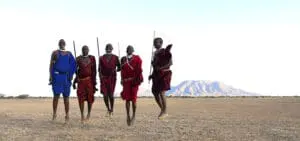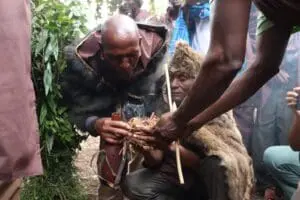
On a crisp August morning in Nkareta near Kenya’s Mau Forest, music carries across the rolling farmlands. Elders laugh over shared memories, women sing songs passed down from their mothers, and children scamper across the model village built to reflect the homes of their ancestors. They have gathered for the sixth Ogiek Cultural Day.
“I would like to leave my children knowing where they come from,” says Joan Naduekop, one of the women involved in building the cultural center where the event is hosted. “Our traditions, our medicine, our honey… it all comes from the forest. If they don’t learn this, they will forget who they are.”
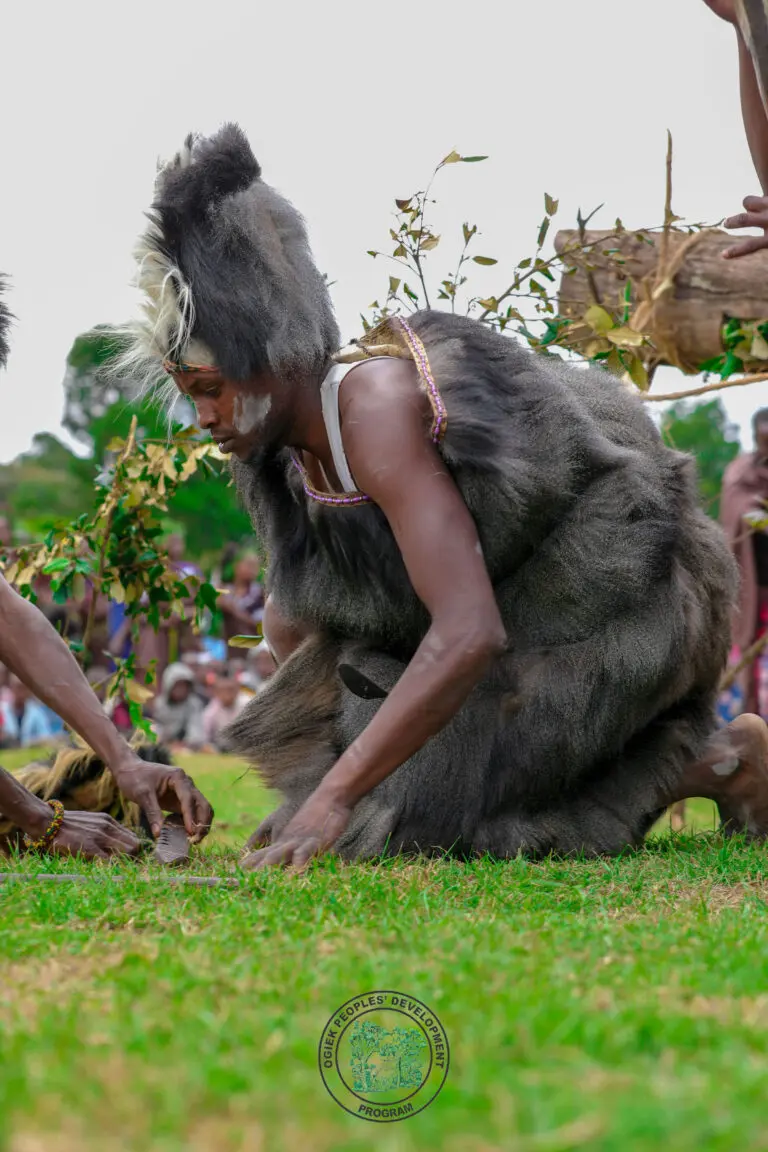
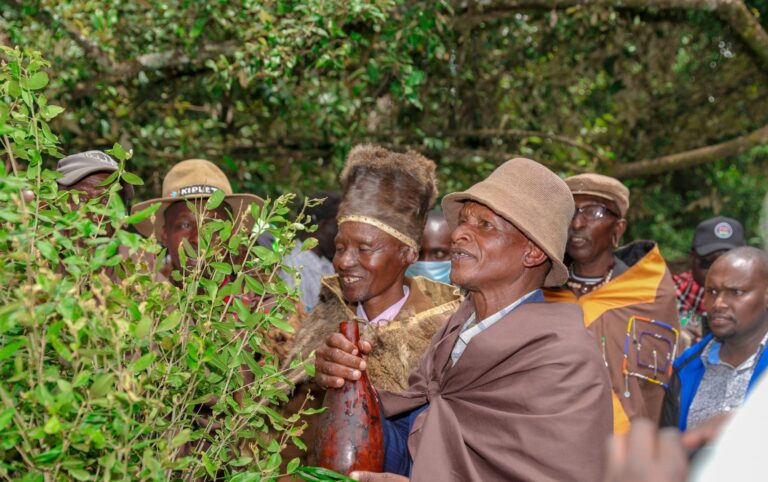
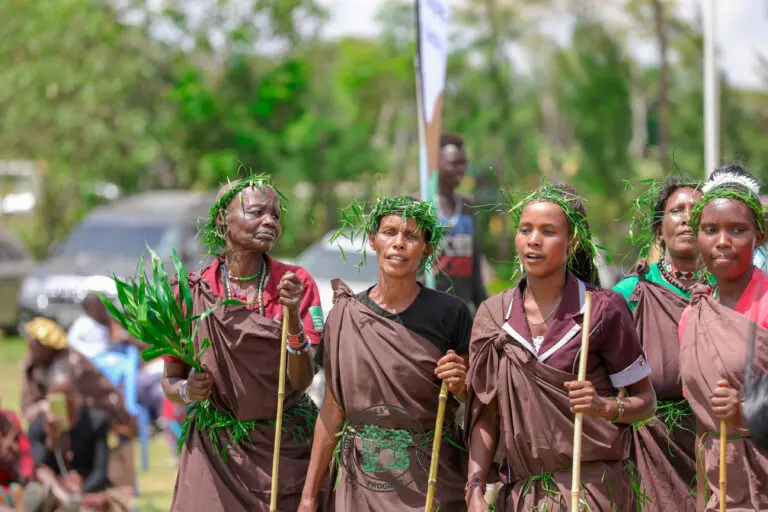
The celebration is more than a festival. It is survival, resistance, and hope. The Ogiek Peoples’ Development Program (OPDP) has held the event annually since 2012, and believes storytelling and cultural revival are as central to their fight as court battles or political lobbying. Because for the Ogiek, the Mau Forest is not just their land; it is their identity, livelihood, and community.

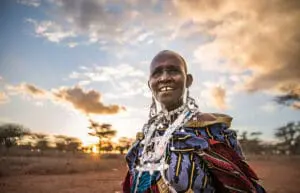
“When we ran out of honey, we would migrate to different areas within the forest to visit my relatives to see if they had caught anything. We would sit together and eat, when I got married, we had two dogs that would help us hunt, Sebulech and Gwisa. They protected us; barked to alert us when there was a dangerous animal around, and I would then stay ready, armed with my bow and arrow.” Joseph Leleloito Malenget, who was born in the Mau Forest in 1943 remembers this time well.
The colonial administrators and successive Kenyan governments branded the Ogiek as squatters on their own land. Beginning in the early 20th century, waves of dispossession stripped them of their ancestral home, pushing them to the margins under the guise of conservation or development. Despite the Ogiek’s identity as the Mau’s original custodians, they have repeatedly been scapegoated as threats to the forest.
“If someone forcibly comes to you and you have no might, what else is there to do other than remain quiet and accept the situation? We are not farmers, and therefore cannot make a living, even if we were hired to work on a farm. We see our children are out of school, and some have no food. But we are still fighting and will continue to fight,” says Joseph.
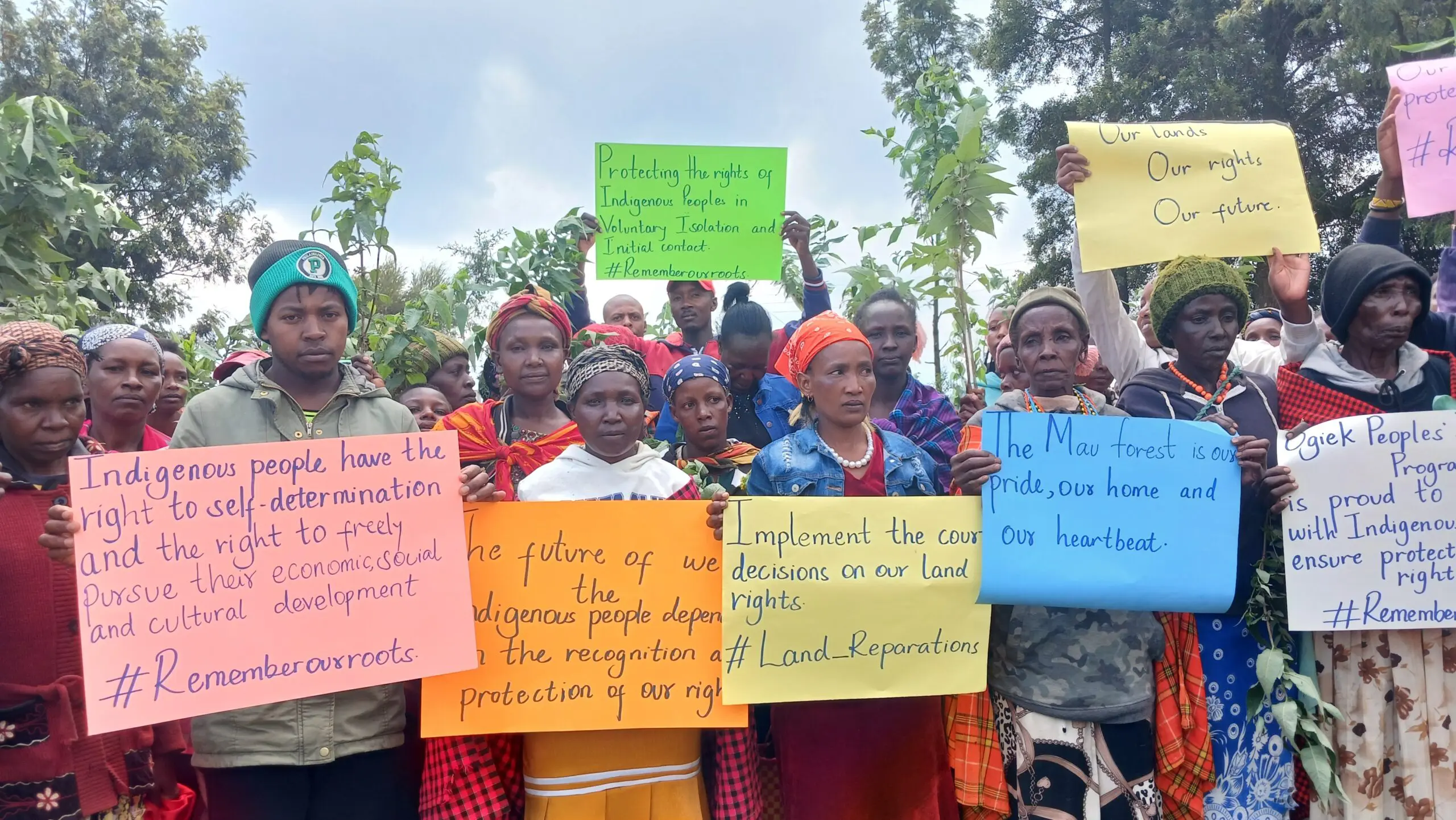

“This prolonged uncertainty has caused significant pain and disillusionment within the community, But we continue to collaborate with the Ogiek Council of Elders. Together, we have remained focused on the original demands of the community, resisting external interference and maintaining a united front.”

The Mau Forest Complex is Kenya’s largest indigenous montane forest, and one of Africa’s most critical water towers. Its rivers feed the Rift Valley Lakes and even the Nile Basin, sustaining millions of people and some of the continent's most iconic ecosystems, including the Maasai Mara and Serengeti. Beyond rivers, the Mau regulates regional rainfall, supports agriculture, underpins Kenya’s hydropower grid, and acts as a massive carbon sink. Economically, its contribution cannot be overstated: a 2021 study by the Kenya Forest Research Institute estimates that the ecosystem services it provides account for KES 184 billion (~$1.8 billion). The vast majority of this value comes from regulating services – water purification, flood control, and climate regulation – meaning that the Mau’s greatest gift is not just timber or land, but the invisible lifelines that keep entire economies, landscapes, and communities functioning. Yet, the forest is under siege. Global Forest Watch estimates a 19% loss in tree cover between 2001 and 2022.

“We love the forest because we found it with our parents, grandparents, and those who came before. That’s why we protect it, because the elders protected it,” says Frederick Lesingo, a community forest scout working with OPDP. “People who come from faraway places aren’t friends with the forest; they don’t have love for it… If they see trees, they see money. It hurts us a lot.”
That love for the forest extends beyond words. Community volunteers have turned sacred sites into classrooms for restoration. Guided by elders and forest scouts like Fredrick, they began by protecting mugumo trees – the giant fig trees that serve as spiritual shrines – and replanting the surrounding forest with native species like Kenyan cedar and African olive. So far, they have restored over 100 hectares of degraded forest in Logoman and planted more than 60,000 trees across four Mau blocs. These efforts, built on a partnership between OPDP, the Kenya Forest Service and local associations, have achieved tree survival rates of over 85%.
While authorities justify the eviction of the Ogiek in the name of conservation, research has shown that biodiversity thrives where they still reside. A 2023 report found that parts of the Mau still occupied by the Ogiek had higher tree cover and biodiversity compared to other sections, many of which have been cleared for farming or logging. The evidence reveals a painful paradox – that those cast as threats to the forest are in fact its best protectors.
Stewardship, for the Ogiek, is inseparable from identity. “The name 'Ogiek’ itself means caretaker of flora and fauna, a title that reflects both their historical role and ongoing commitment to environmental protection,” says Daniel. The landmark African Court rulings of 2017 and 2022 recognized that Ogiek conservation practices were central to their claim to the Mau, and OPDP believes the Ogiek culture’s deep interconnection with nature was key to the favorable rulings.
Still, in 2023, more than 700 families were violently evicted from Sasimwani under misguided national conservation policies. Their homes were burned and their livelihoods destroyed, despite international rulings in their favor and mounting ecological evidence of their stewardship. These actions lay bare the entrenched tensions between state-driven conservation models and Indigenous custodianship.
In parallel with its advocacy, OPDP is working to secure the community’s survival in more practical ways. That means restoring degraded land and training forest scouts like Fredrick, who patrol and monitor the forest, combining Indigenous knowledge with conservation science. It means supporting education in communities where displacement disrupted schooling.
“Before, our children didn’t go to school, but OPDP held our hands. They helped us send our children to school. They even supported us with sheep and cows so we can sell milk to pay
school fees.”

For many women like Leah, OPDP has been a catalyst for empowerment. At the cultural centre, they lead tree nurseries, grow medicinal plants, and teach children the practices that risk being lost. “Women’s voices were hidden before,” Joan reflects. “Now we are seen and heard. We want to teach our children to follow our footsteps.”
Through cultural revitalization, OPDP is ensuring continuity. Beekeeping, ceremonies, and herbal medicine are not just heritage; they are living systems of knowledge for adaptation and resilience. Equally important is the work of storytelling. Oral traditions are the foundation of culture, with elders passing down wisdom about the land, plants, animals, and spiritual beliefs through stories.
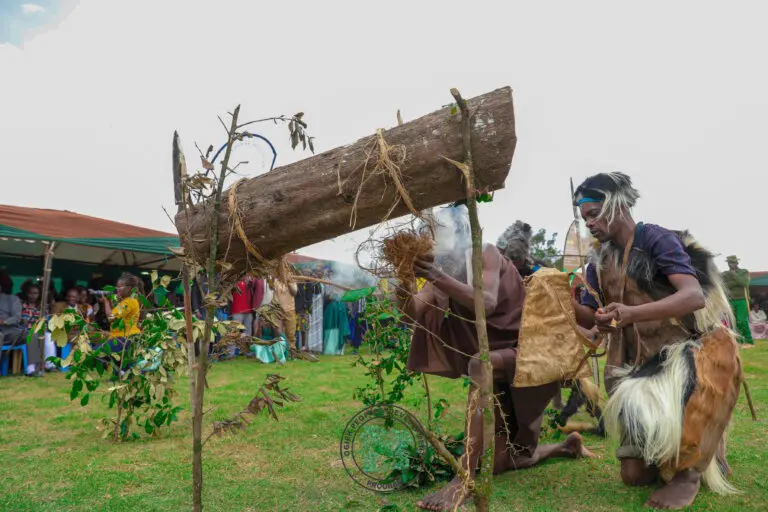
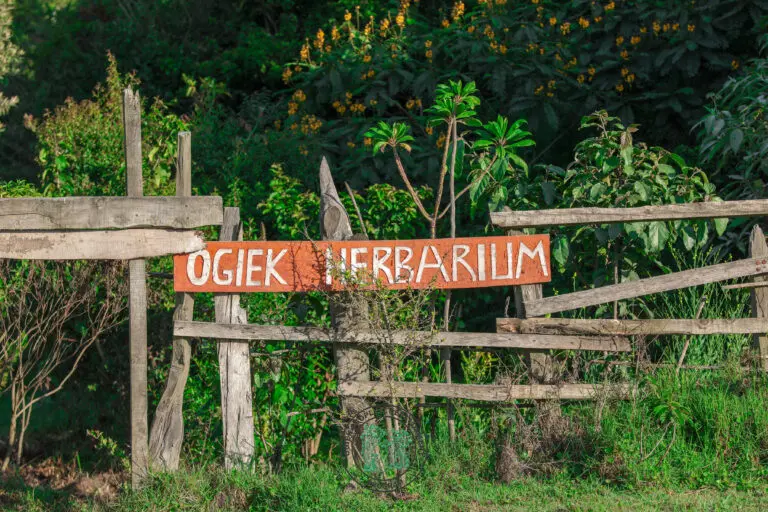
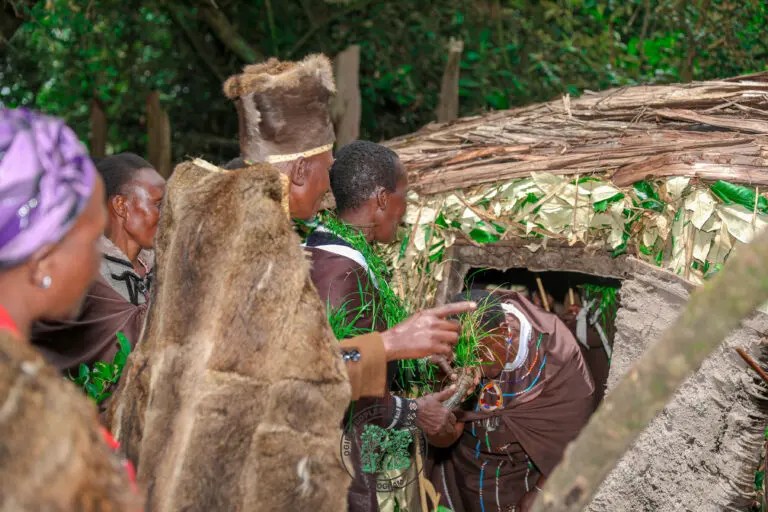
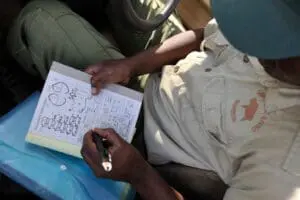
One of OPDP’s ongoing initiatives is the Culturally Embedded Health Initiative, which documents the Ogiek’s knowledge of herbal medicine and traditional healing practices. Elders and healers share their expertise on medicinal plants from the Mau – how they are gathered, prepared, and used – alongside the cultural meanings woven into each remedy.
“These stories are recorded, transcribed, and archived not only to preserve this invaluable knowledge but also to validate and uplift Indigenous science within broader health and environmental conversations,” explains Daniel.
The Ogiek Museum stands as a living repository of the community’s heritage, with exhibits and artifacts that trace their traditions, language, and relationship with the forest. Online language classes are helping revive the critically endangered Ogiek language, using storytelling to teach vocabulary and cultural expression grounded in lived experience. OPDP is also working towards building the first-ever Ogiek dictionary, safeguarding words and meanings that carry generations of knowledge.
Through these initiatives, storytelling becomes more than memory-keeping. It is a strategy for survival and self-determination. By preserving stories, we are not only keeping history alive, we are empowering future generations with the tools to shape their own future, rooted in cultural dignity and ecological responsibility,” says Daniel.
OPDP’s struggle does not stand alone. Across the world, Indigenous communities face similar battles - legal victories followed by government inaction, and conservation models that exclude the very people who have sustained ecosystems for centuries. These parallels highlight a global truth: Indigenous rights are not only human rights, they are our best chance at restoring humanity’s relationship with nature. Recognizing and securing them is central to protecting biodiversity, combating climate change, and ensuring sustainable futures.
For 82-year-old Joseph, justice means returning to his home in the forest.“They can take what they want, and they can leave us with what is left. God created it in this way, where the seeds are always naturally available in the forest. Even in a place like this [without trees], it will always grow back.”
The Ogiek fight reminds the world that conservation without people is a hollow promise. The forests that sustain rivers, wildlife and economies across East Africa - and beyond - will only endure if their rightful custodians are recognized, respected and restored to their lands.
Nos dernières actualités et opinions
Des histoires inspirantes de notre équipe et de nos partenaires
Notre travail présenté dans des médias externes
Des mises à jour régulières de notre équipe et de nos partenaires