“Why do only the managers get the training?” That question kept coming back from our team as our managers spent 2024 immersed in leadership trainings. We had to admit that we didn’t have a good answer.
Most NGOs approach leadership development the same way: invest in directors, sometimes in middle managers, and expect the benefits to trickle down through the organisation. This approach is not only based on a big assumption, it also widens skill gaps within the team. For the training to stick — for it to actually change how an organisation functions — it must reach everyone. At Dahari, that meant all 58 of us.
Since 2023 we’ve worked with Maliasili, who support local conservation organisations across Africa to become more effective. Their leadership programme typically trains cohorts of senior staff drawn from different organisations. But Liz Day, Maliasili’s Madagascar Director, proposed something different for us. Rather than have our Directors joining a wider cohort, Maliasili could deliver the training to all of our eleven managers, in the Comoros. We didn’t know at the time that this would be just the first step of a much deeper process.
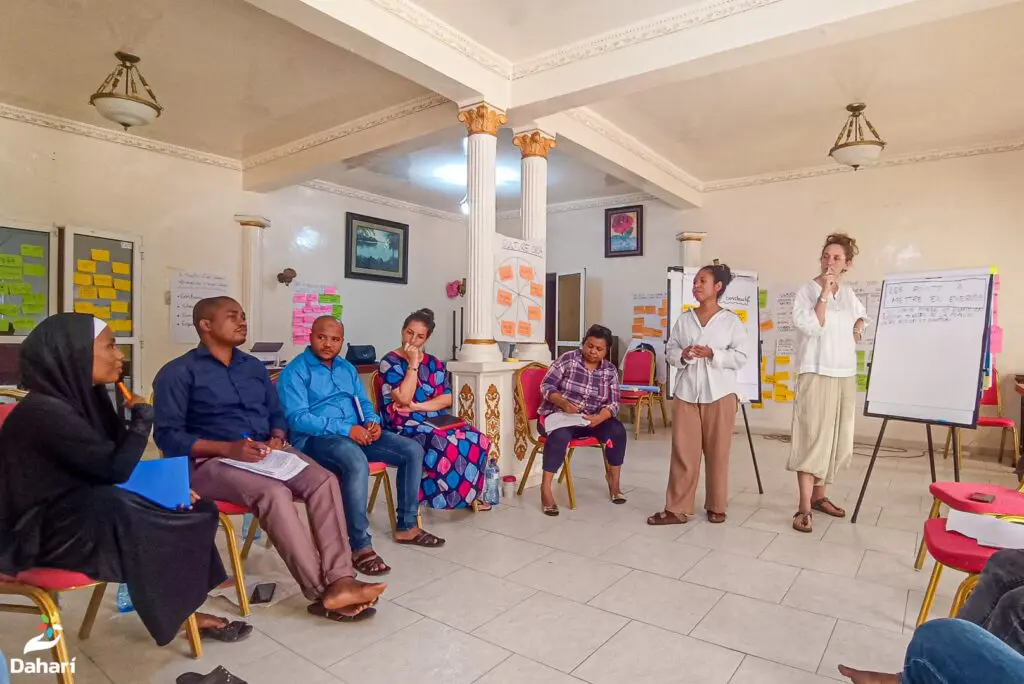
Over two week-long workshops in 2024 our management team worked through Maliasili’s ‘Leadership of Self’ and ‘Leadership of Teams’ modules. Between the workshops the managers facilitated sessions with their peers to bring the frameworks to life. We complemented this with coaching sessions for each manager on their personal development priorities with our excellent French coach Lucie. We also held book club sessions led by our Board President Dr Anssoufouddine, varying from excerpts of African novels to papers on slavery in the Comoros, which remains a taboo subject but continues to structure everyday interactions.
Along the way we came to realise that what appeared on the surface to be skills gaps — things like giving feedback and managing time — were often rooted in more deep-seated issues. Our managers first needed to develop confidence in themselves, in their own authority, and in their ability to support the growth of their colleagues.
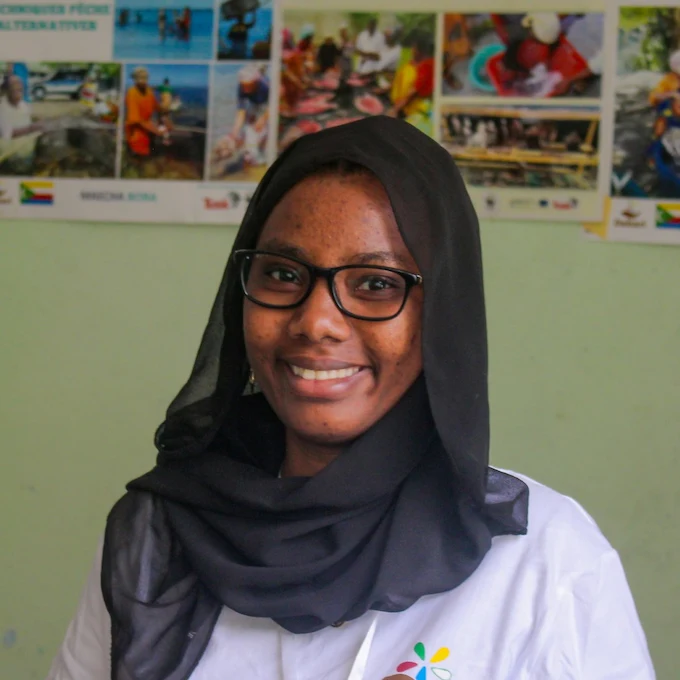
“I see a lot of changes in myself, in my way of being and doing. Before, I took feedback badly; now I am able to understand my strengths and weaknesses, and see it as a gift. I used to wonder if I had what it took to be a manager. These trainings have allowed me to strengthen the trust in myself, and to accept myself.”
Nastazia, Forests manager.By the time our management team completed the first two workshops, questions from the wider team about their desire to benefit from leadership training had become difficult to ignore. We realised that we needed to be able to speak with the same language about the models we had learnt, embed the most useful in our daily practices, and in the process, deepen the learning for the management team – because the best way to learn is to teach. The next set of workshops with Maliasili in 2025 therefore shifted gears: building the facilitation skills of the management team in preparation for delivering the training to the whole team.
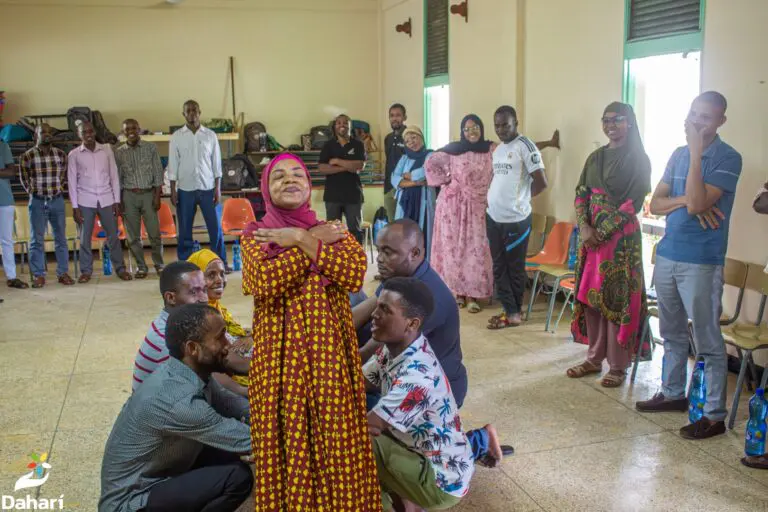
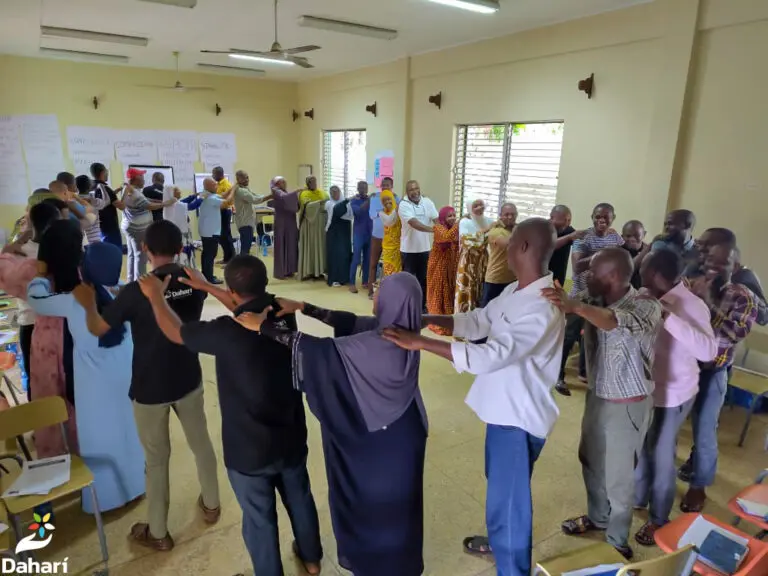
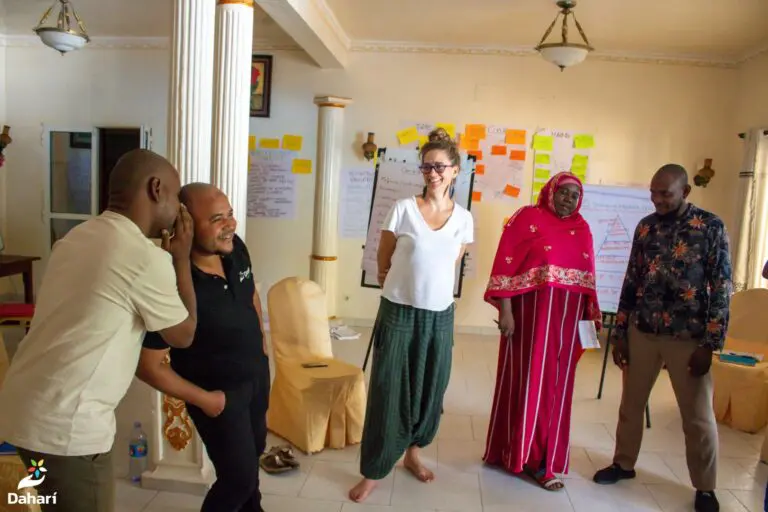
By the end of January, the management team was ready to facilitate a two-day workshop with the aim of reinforcing trust and cohesion at Dahari. The workshop focused on two models: Gallup’s Four Leadership Needs of Followers — Compassion, Hope, Stability and Trust – and Brené Brown’s BRAVING framework for trust, which we’d converted into the French acronym COURAGE. We identified practical applications for the models, asking the team to use the 4 Needs to identify improvements to the management of Dahari, and BRAVING to identify a personal weakness to work on to improve trust at Dahari.
A key element of trust-building is demonstrating vulnerability, which was why it was important that we as a management team opened ourselves up to feedback as a starting point – and committed to implementing the key requests. Nonetheless, the team still found it difficult to put themselves into question using BRAVING until the Directors stood up to explain which elements of the model they struggled with. This display of vulnerability from leadership had a powerful impact on the team, which carried through into small group discussions post-workshop with everyone given time to finalise an area of growth they wanted to work on with the input of the colleagues who knew them be
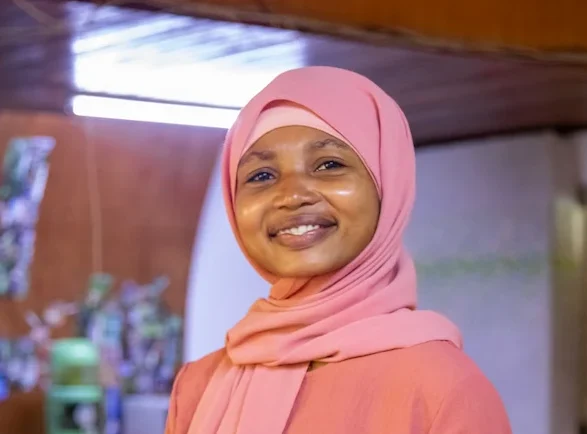
“During the individual evaluations, I realised weak points in myself that I hadn’t previously been aware of. It was powerful.”
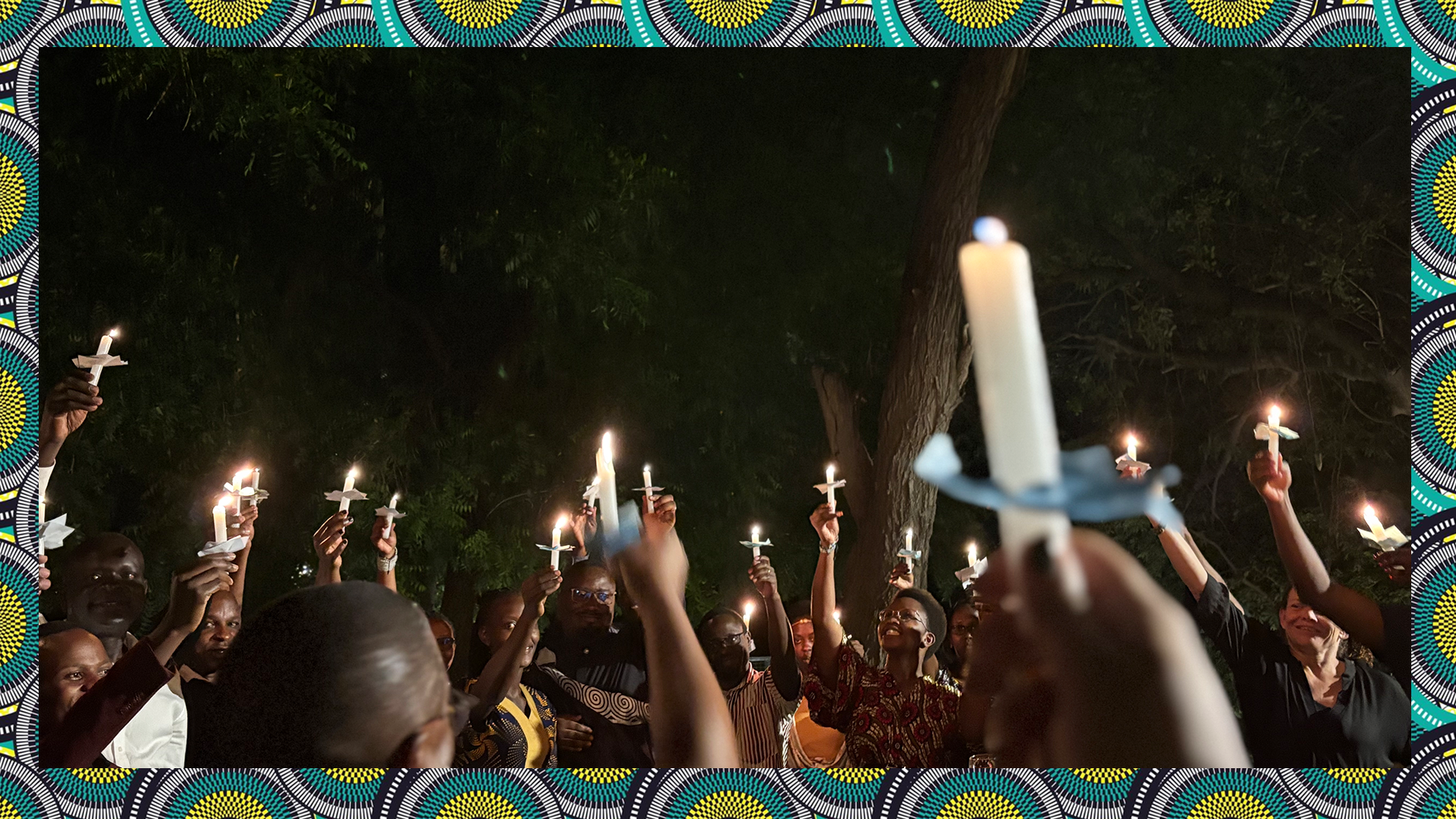
Amina Miradji. Marine TechnicianThe hard thinking was sustained by lighter moments. Aboubacar and Ibrahim – the team’s two fundis – led morning meditations, and a multitude of energisers kept the momentum alive throughout (communal shoulder massages come highly recommended!). Our comms manager Nadjil ran the Trust Fall exercise three times over the course of the workshop. The first attempt, falling from standing height, drew laughter. By the third – from the top of a table – it was a different story, for those falling and those catching. It was a small but vivid illustration of another aspect of building trust: letting go, and showing up for someone who does.
When we sat down towards the end of 2025 to design the workshop for our full team, we could remember almost none of the frameworks from the previous management workshop we’d done years before. That is the default outcome of training over time.
A key lesson from these three years is that to avoid the same result, workshops should be only the beginning. Constant, dedicated follow-through and practice is required to embed this sort of training throughout an organisation. In our case, that took the shape of one-on-one coaching sessions for our managers, the book club, and mini sessions to refresh the context from the bigger workshop and go deeper into the content and results. The next step will be to keep building on this progress when we bring the full team together every six months – both through revisiting the existing frameworks and integrating new ones.
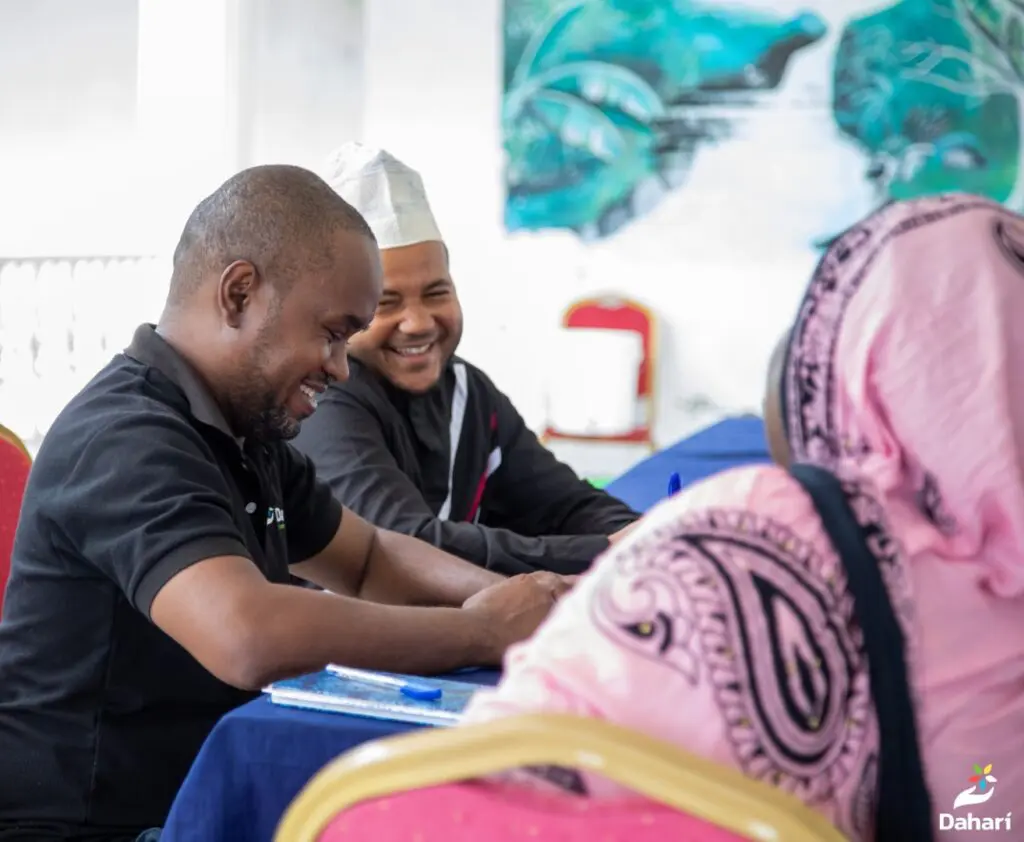
This all takes a lot of time and energy, which is not easy to find. But we have no doubt that the investment will pay off. Already, we can feel the cogs of our organisation turning more smoothly, allowing us as leaders to concentrate more of our time on higher-level work. We can see our managers gaining confidence in their ability. And in turn, we can see the team’s confidence in their managers growing.
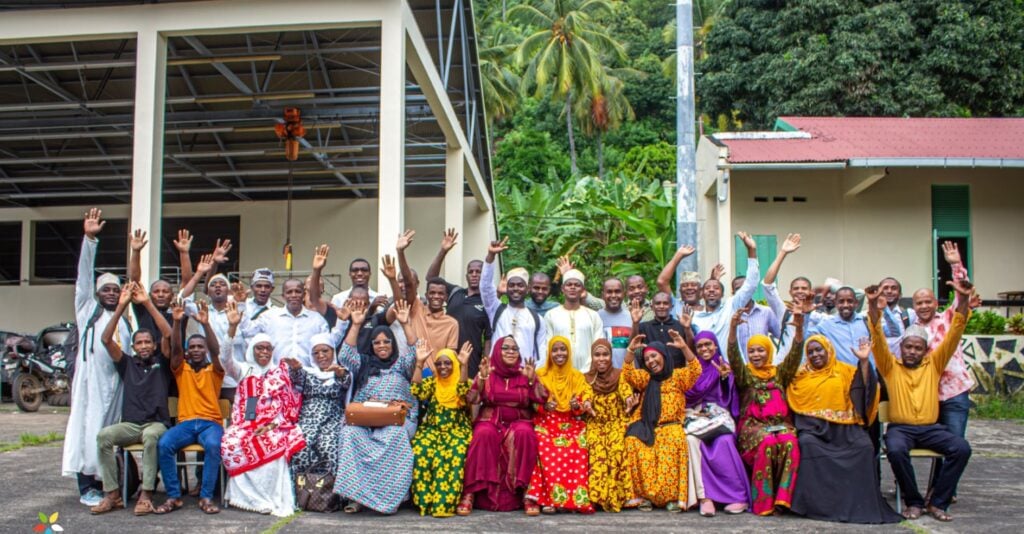
Our advice to other local NGOs weighing up how to approach leadership training: don’t leave the benefits of training of leaders to trickle down – that approach works as well as it does in the economy. Investing in the leadership capacity of your whole team has a compounding effect, which means that there is no time like now to get started.
We are grateful for a team that asked the right question and wanted to go further. That question has led us down a path to being a more connected and stronger organization.
“With everything we have seen — the discussions, the teamwork — we trust that we are on the right path, and that we can go much further together
Combo Abdallah, Senior Agroforests TechnicianNos dernières actualités et opinions
Des histoires inspirantes de notre équipe et de nos partenaires
Notre travail présenté dans des médias externes
Des mises à jour régulières de notre équipe et de nos partenaires