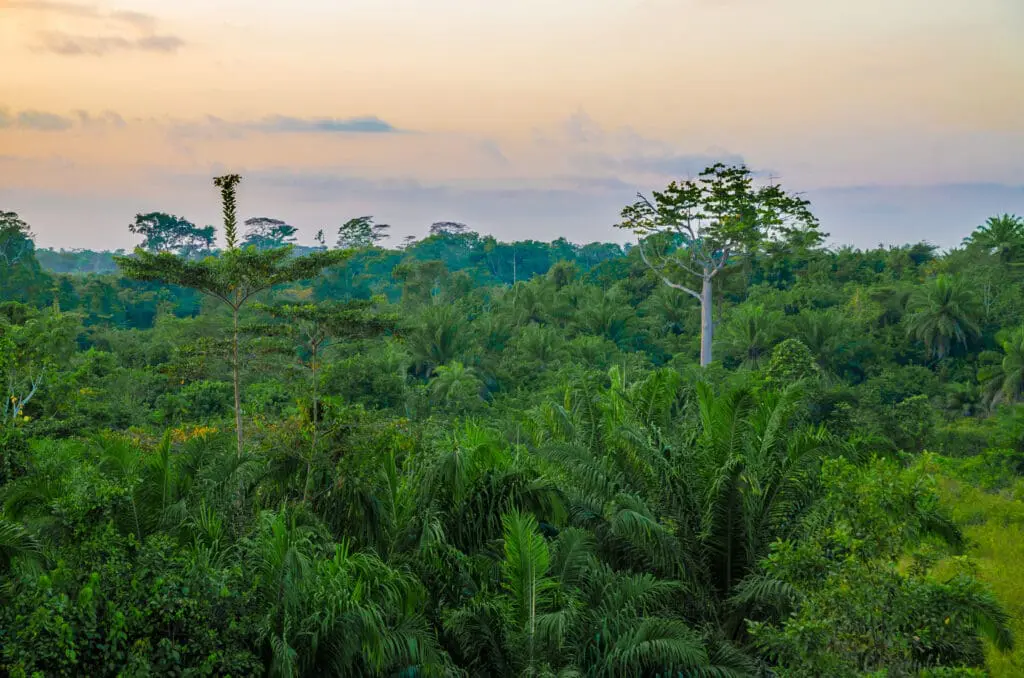
Few people outside West Africa have heard of the Upper Guinean Forest. Fewer still know that Liberia holds nearly half of what remains of it – one of the oldest, most biodiverse ecosystems in the world, and one of the least protected. The decisions made here, by people most of the world will never hear of, carry consequences that reach far beyond them.
Sei D. Morgbaye has watched those consequences take shape over time.
“When we were young, the forest was full of life,” he says. “There were big trees, vines we could climb, places we could play and swim.
“But as time went by, those things started to disappear. Now this is the only place we can still see what we used to see.”
As secretary of the Executive Committee for the Gba Community Forest, the loss he describes is personal. Yet, decisions about these landscapes have long been made elsewhere.
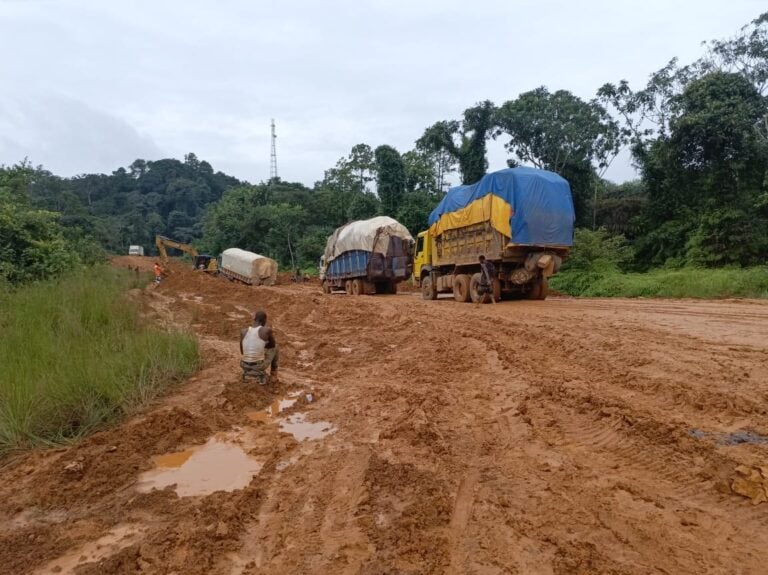
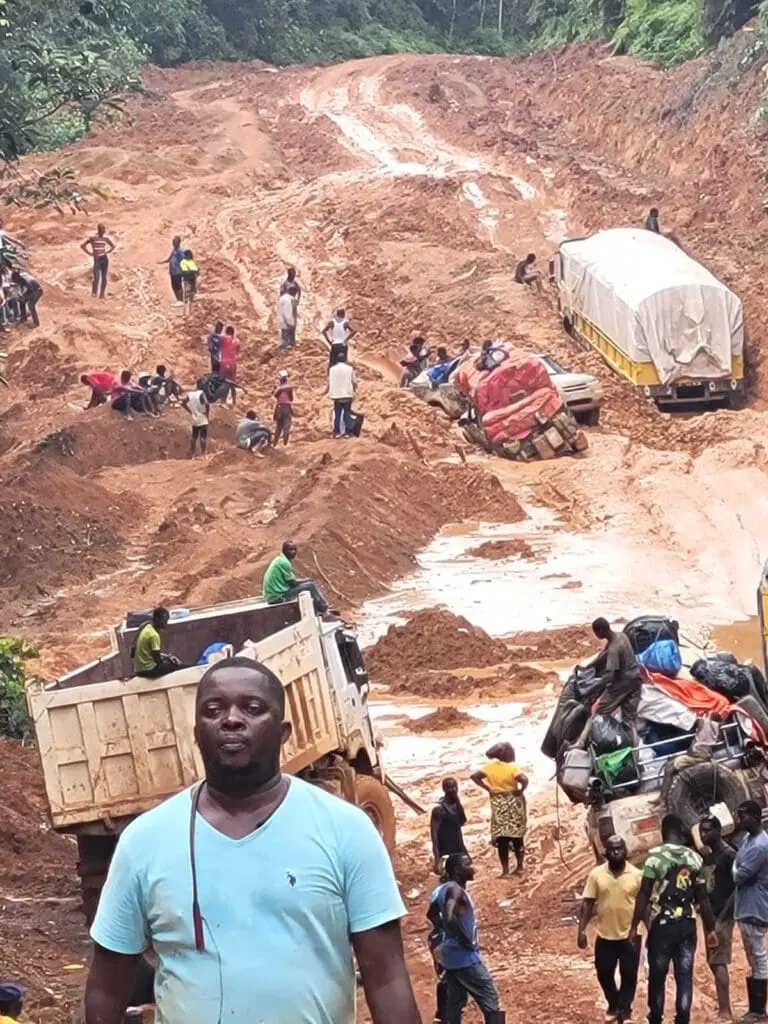
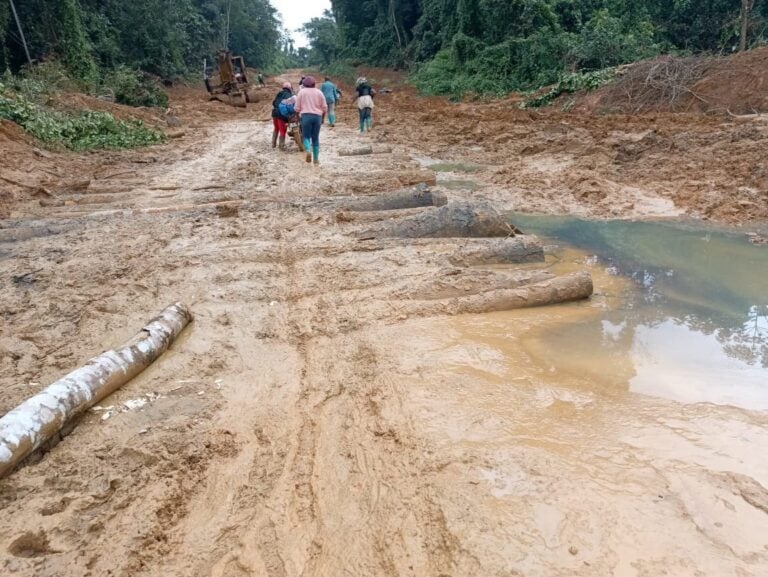
For decades, Liberia’s economy was shaped by large-scale concessions for oil palm, mining and timber. These agreements were built on frameworks that treated customary land as state-owned. Between 2006 and 2012, more than 30% of its land was allocated to extractive corporations without the knowledge or consent of the people who lived there. In many cases, the first sign that something had changed was the arrival of these companies in the forests.
“Communities were not consulted. Agreements were signed without their participation,” says SESDev co-founder and coordinator, Daniel Krakue. “People only realized what was happening when the companies started operating.”
The effects were felt deeply and immediately: lost access to farmland and forests, rising social tensions and growing uncertainty about who had the right to decide what happens to land at all.
Social Entrepreneurs for Sustainable Development (SESDev) was founded in 2009 in response to these realities.
“We didn’t start purely with conservation. We started from a human rights perspective,” explains Mina Beyan, SESDev Programs Director.
Their early work focused on the southeast, where many concessions were concentrated, few civil society organisations were present, and communities were navigating complex agreements with little information or support.
“Many of the same landscapes where communities were facing these issues were also facing conservation challenges,” she adds.
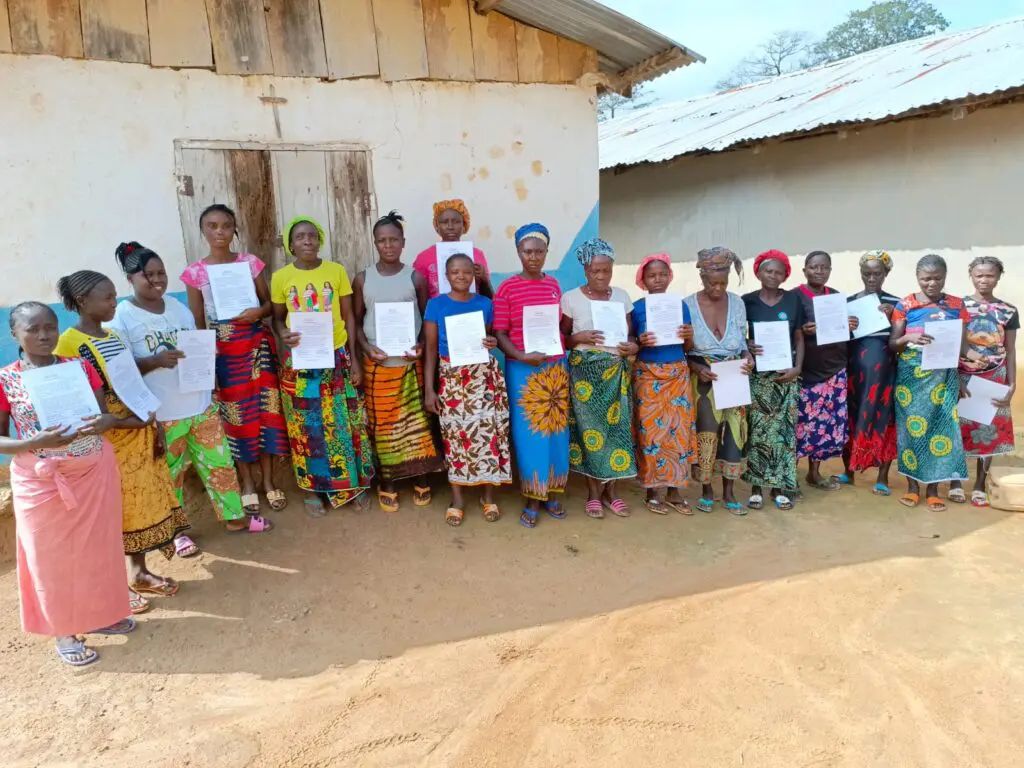
SESDev has worked for the last 15 years to bridge that gap by supporting communities to understand their rights, organise themselves and engage more effectively in decisions about their land.
Since its founding, the organisation has worked with 45 self-identified communities across 7 counties, supporting processes ranging from policy development, land formalisation and negotiations with corporations.
Liberia has taken important steps to address these historical inequalities and now has one of the most progressive land rights frameworks in Africa. A series of reforms – including the Community Rights Law (2009) and the Land Rights Act (2018) – recognise customary land ownership and require Free, Prior and Informed Consent (FPIC) for land-based investments.
“The law is there, but implementation is slow,” says Mina Beiyan, Programs Director at SESDev.
SESDev operates within this transition zone, where rights have been recognized but power in practice is still being negotiated.
“We work to raise awareness and help communities understand their rights,” says Daniel.
That work begins at the most basic level: making the law make sense. Community members gather to walk through what the Land Rights Act means for their lives, how FPIC works, and what steps are needed to formalise and manage their land.
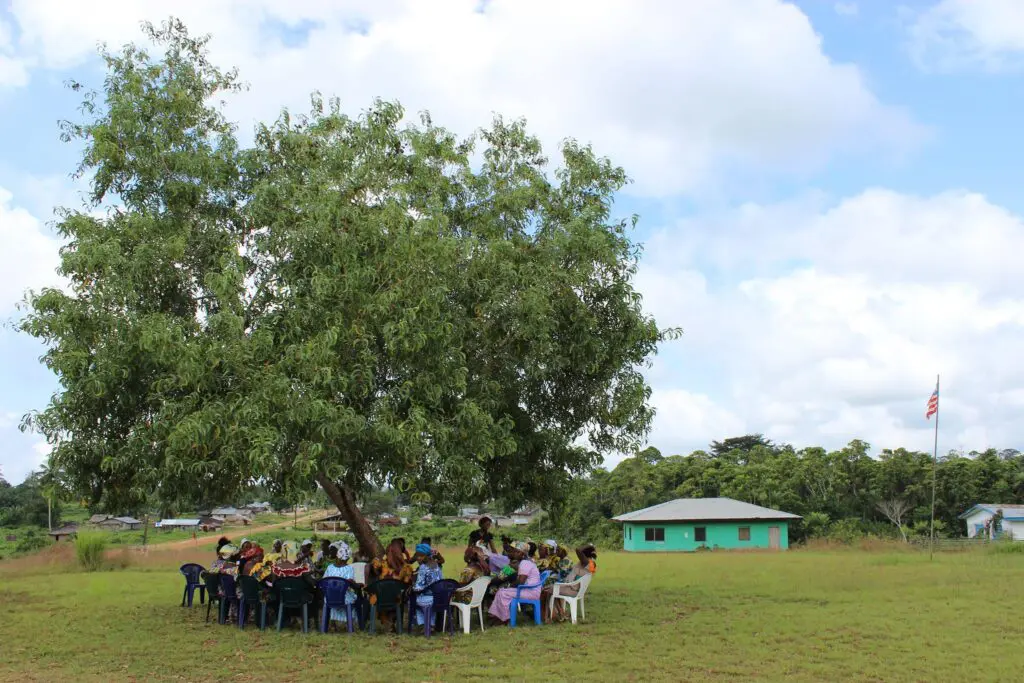
These are not quick or glamorous processes. They unfold over months, sometimes years, and require repeated engagement, negotiation and adjustment.
“Communities are now refusing meetings if proper process is not followed,” Daniel explains.
This small shift signals something important. Communities are no longer reacting to decisions, but beginning to shape how they are made.
In Gba Community Forest, these changes are most clear.
“Before, we thought the only way of using the forest was to go and cut it down,” says Sei. “But through the training, we got to know there are other things in the forest like fresh air, fresh water…Now we are learning how to use the forest in a better way.”
Community Forest Management Bodies (CFMB) oversee how the forest is used, and set rules on harvesting and monitoring. Trained forest guards patrol the area, collect data and report violations.
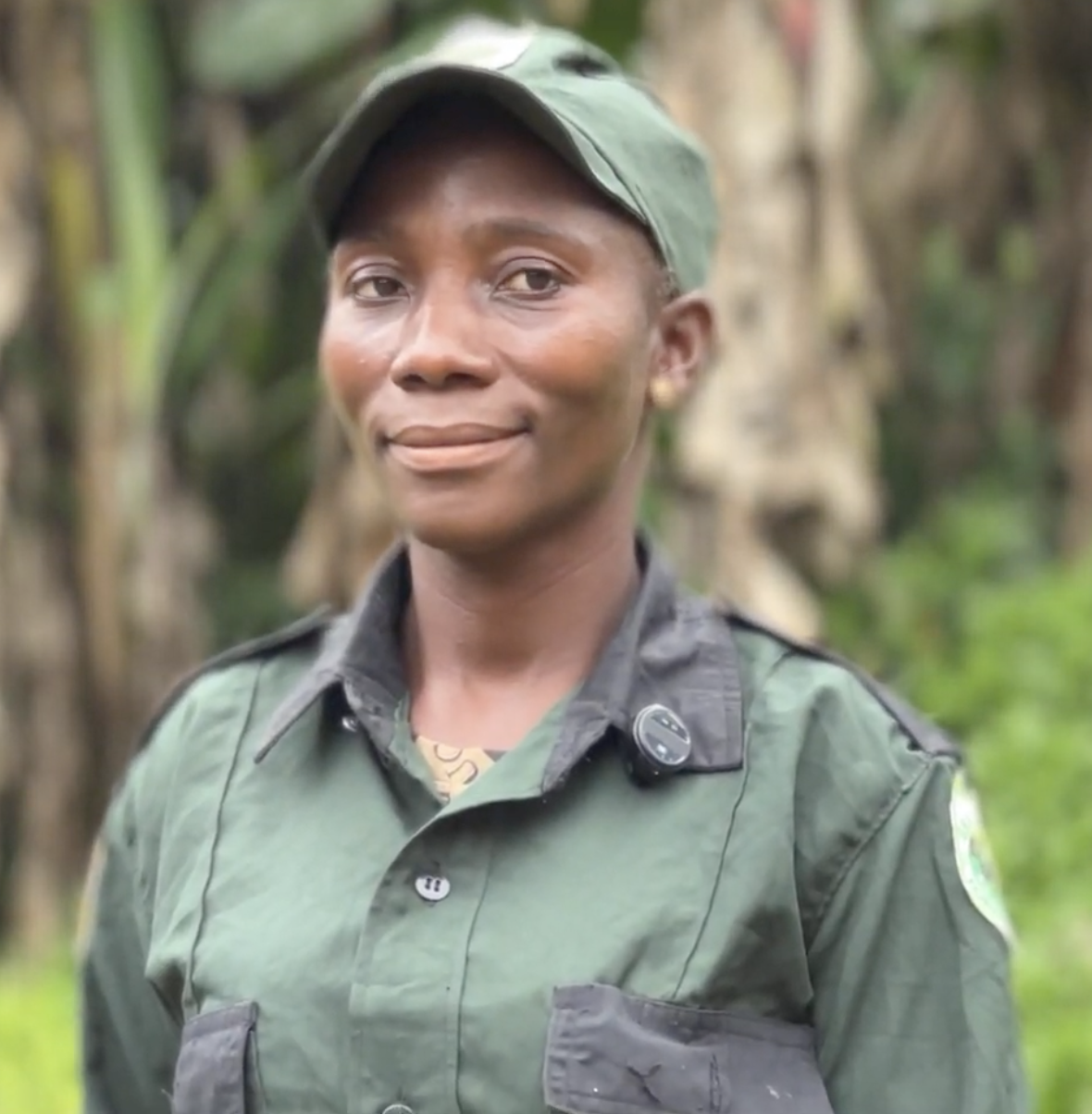
“I chose to be a forest guard because I want to protect my forest, [I do it] so our children will know the animals and the trees, so we can keep them. If we see something is not right, we talk to them and educate them about the importance of the forest. When they want to fight, we cool them down.”
Women are taking an active role in forest monitoring, with patrol groups sometimes going into the forest for days at a time to check for signs of illegal logging and burning, fishing or farming in areas where those activities are prohibited.
In Lofa County, SESDev has moved beyond securing rights to building a stronger link between conservation and livelihoods - an essential step in making conservation last. When the Sayalea community formalised its forest in 2019, they made a deliberate choice.
“We decided to focus on conservation because our forest is only about 8,270 hectares,” says Yassah Mulbah, the Chief Officer of the Salayea Community Forest Management Body. “If we went for commercial logging, our resources would finish and we would cry like the other communities.”
“Through the savings groups and enterprise activities, the women are now managing their own money, sending their children to school and even buying things like a rice mill together,” Yassah says. “They put their own money together, support each other. Our motto is ‘keep the forest for the next generation’.”
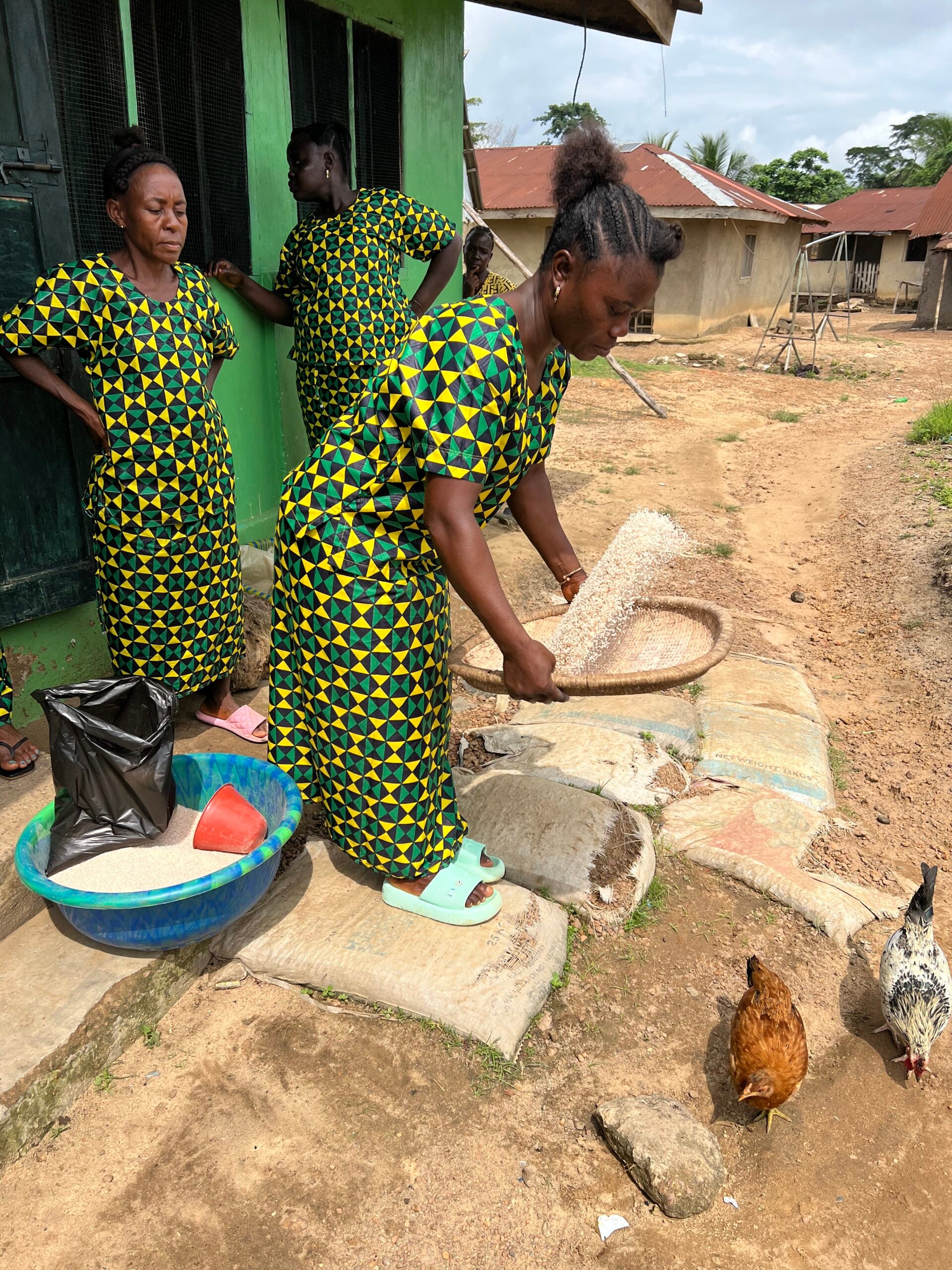
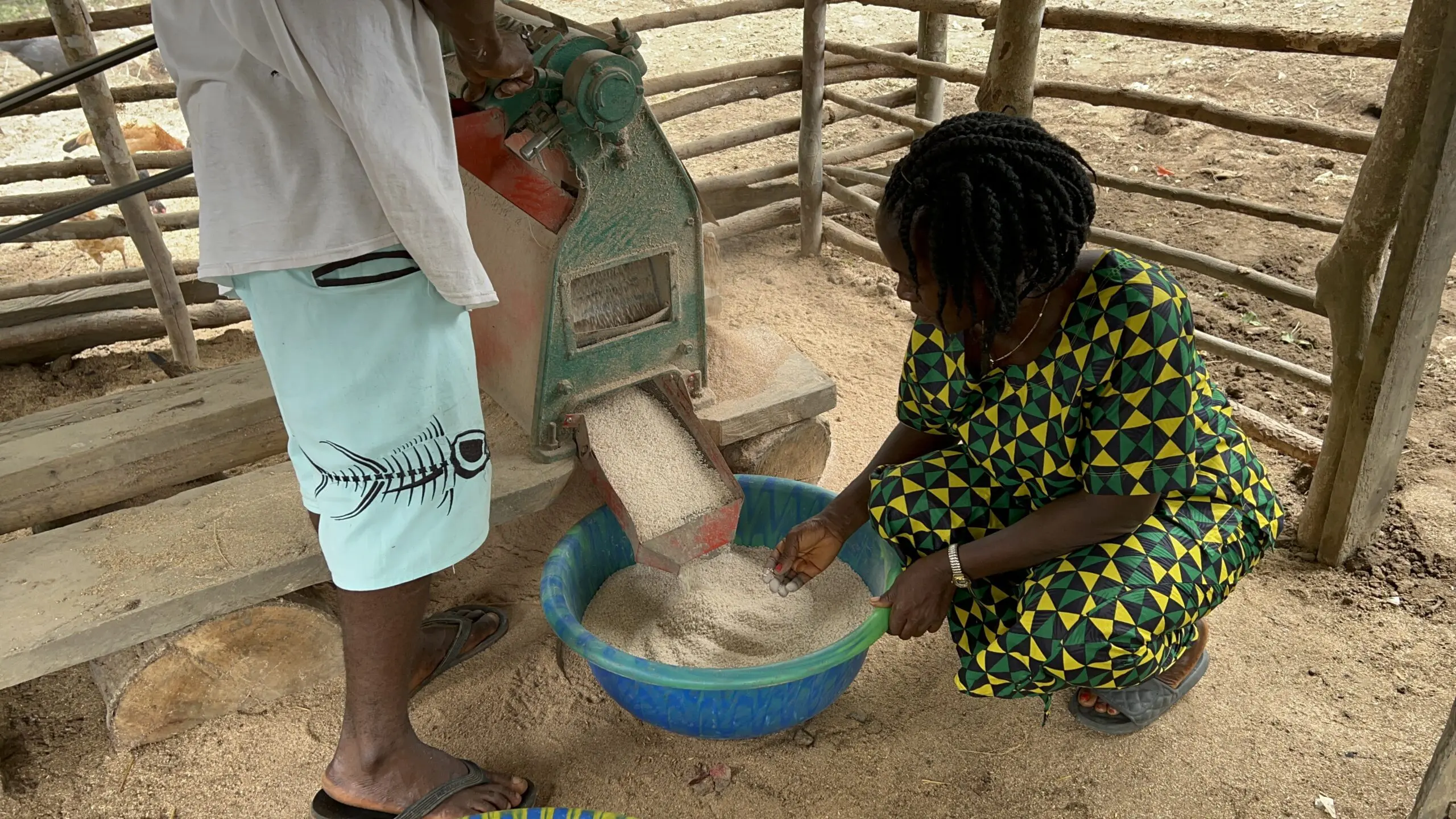
In Makinto Town, in Nimba county, Marion Bato made the same transition – from slash-and-burn farming to agro-forestry.
“Agro[forestry] is very fine. When [SESDev] give us support, we can use the money to brush our farms – no burning, no fear… it is very good and today we are seeing the result,” Marion says.
She leads a group of 21 farmers who grow cocoa, cashew and other crops using methods that are easier to manage, better for the land, and more resilient.
“I will not go back to the old farming,” Marion adds. “This one will help us tomorrow.”
SESDev’s support has made a significant impact in Nimba and Lofa counties. However, these gains are not uniform and they are not guaranteed to hold. The systems in place are still relatively new. Governance structures are evolving, roles are still being understood, and participation does not always translate into influence.
“Women are included, but in practice, men still dominate decision-making,” Mina notes.
In some areas, forests guards and committee members operate with limited resources. Travel is difficult, communication is uneven and maintaining momentum can be challenging when funding gaps emerge.
As Yassah notes, “[We] want to do conservation, but how can you encourage people if they are not benefiting?”
These dynamics are also becoming more complex due to external pressures. International interest in Liberia’s precious forests is growing – from carbon offset projects to conservation finance and private sector investment. While these initiatives present opportunities, they also carry risks.
Unclear processes and weak enforcement could once again sideline communities if agreements are negotiated quickly and without a full understanding of their long-term implications.
“Communities were not consulted before,” Daniel reflects. “If it happens again in a different way, then we have not really learned from the past.”
At the same time, climate change is already affecting how communities use their resources. Changes in rainfall patterns and more frequent flooding have disrupted farming seasons, limited access to forests and markets, and made it harder for communities to plan and invest for the future.
“We are not just working on land anymore,” says Mina. “We are working on how communities can manage that land over time, and how they can adapt when things change.”
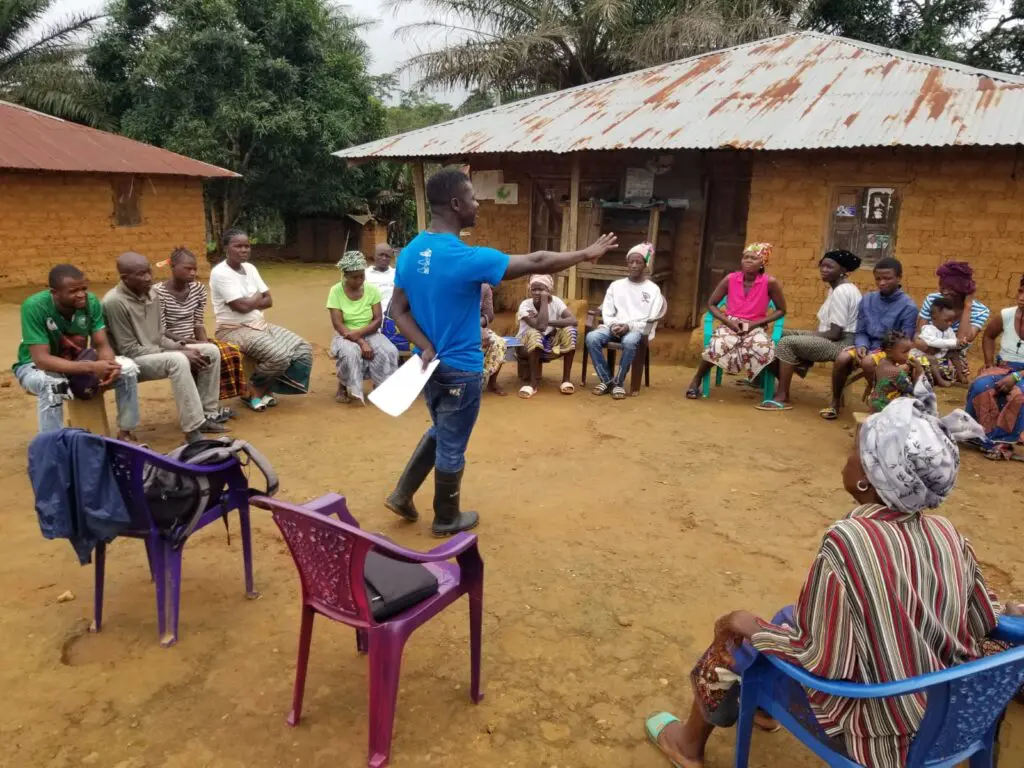
Liberia’s forests are not well known, but they should be. They hold extraordinary biodiversity like pygmy hippopotamus, chimpanzee and forest elephants, and are an essential buffer against climate breakdown. They are critical in West Africa, with seven out of ten rural Liberians depending on them directly. And yet, for most of their modern history, the people closest to them have had the least say over what happens to them.
“The forest is our bank,” says Eugene, reflecting the long term thinking SESDev has worked to entrench – one where the value of the forest is not extracted all at once, but managed over time and for everyone’s benefit.
For fifteen years, SESDev has been working to rewrite that history of exclusion. Not by working around communities, but with them – translating law into practice, building governance from the ground up and helping people understand and exercise their rights. The laws are in place, but law on paper and in practice are two different things and the gap between them is where forests disappear.
In communities like Gba and Salayea, a bridge is already being built – governance structures that did not exist a decade ago, forest guards protecting their resources, women finding their voices. These changes are happening because communities, equipped with knowledge and agency, have made a different and deliberate choice about their land.
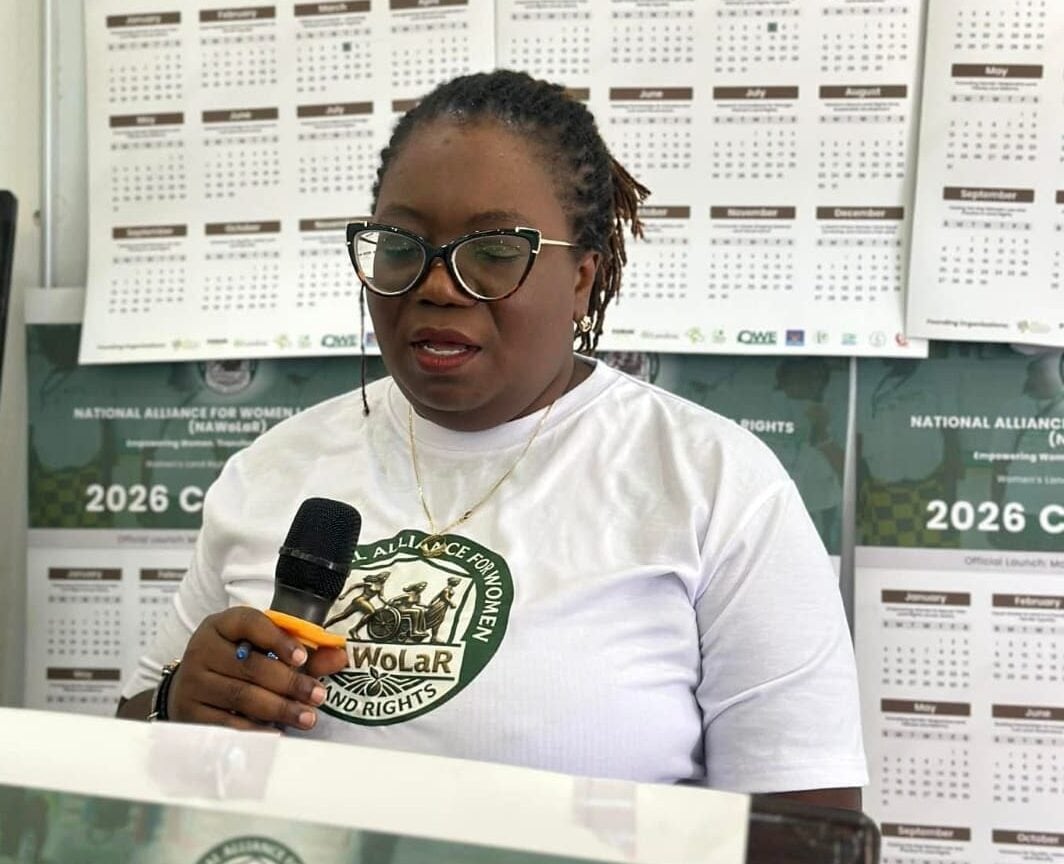
“We have always walked with communities, not ahead of them, SESDev’s philosophy is not abstract; it’s proof that communities are the best stewards of a forest the world cannot afford to lose."
Mina Beiyan, Programs Director at SESDev.Nos dernières actualités et opinions
Des histoires inspirantes de notre équipe et de nos partenaires
Notre travail présenté dans des médias externes
Des mises à jour régulières de notre équipe et de nos partenaires