2026 – 2030 Strategic Plan

Home > About > 2026 – 2030 Strategic Plan

From our beginnings, Maliasili has existed for one clear purpose: to strengthen local organizations so they can achieve lasting conservation impact for people and nature →

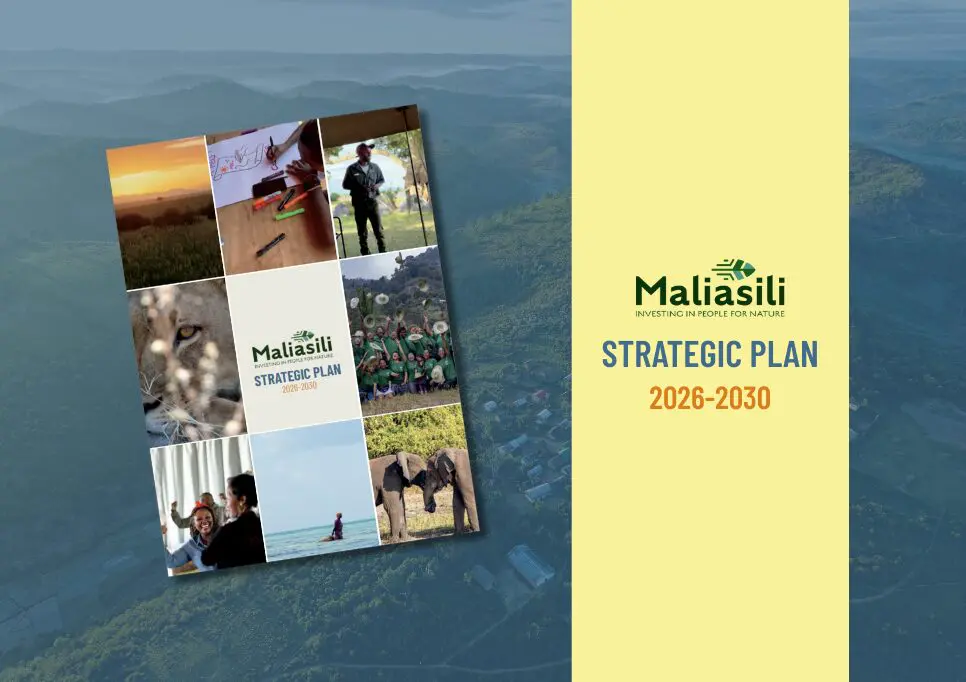
We’re excited to share Maliasili’s 2026-2030 Strategic Plan, a roadmap shaped by 15 years of learning alongside African organizations at the forefront of community-led conservation across the continent.

Since our founding we have provided customized, multi-year organizational support to a portfolio of partners - now numbering nearly 60 African organizations working in 16 countries - and supported over 230 African conservation leaders through our cohort-based leadership programs.

We have helped these organizations become stronger and more effective, have watched them grow their teams and budgets and expand into new communities and landscapes, while building a dynamic and growing community of rising African conservation leaders. We have mobilized millions of dollars in funding for our partners- often muchneeded core or unrestricted funding that can be invested in organizational growth - while working to influence and improve the overall conservation funding ecosystem in Africa and beyond. We fundamentally believe that stronger local organizations can drive expanded conservation impact that benef its people and nature.
Building on the work of the past 15 years, this strategic plan charts our path forward over the next five years, to 2030. Despite the many challenges of the present moment, we believe there is strong momentum behind the locally led conservation approaches our partners are pursuing and that Maliasili supports. We also see a relatively unique role for Maliasili in accelerating the growth and impact of local CSOs in our field. We will therefore continue to be ambitious in this next phase of our journey.
This new strategy reflects both how far we’ve come and the choices we’re making about where to go next at this time of both urgency and opportunity.

The delivery of our work is organized through five key pillars

1. Organizational Strengthening

Supporting local organizations become more effective, with increased capacity to drive change and deliver impact in their communities, landscapes, and countries.

2. Leadership Development

Helping leaders become better equipped to lead successful organizations.

3. Improved and Increased Funding

Getting more and better funding to support the visions and growth of local organizations, including through launching a new pooled fund to provide direct core funding to a larger set of our partners working across Africa.

4. Collective Voice and Action

Connecting and supporting organizations and leaders to advance a shared set of goals for improving community-led conservation at multiple scales, from national to global. We will place greater emphasis on collective action and collaboration as a centerpiece of all our work, as our community of partners grows and their opportunity for systemic influence increases.

5. Scaling Effective Organizational Development for Conservation

Creating new resources and tools that share and spread our approaches beyond Africa, contributing to more effective organizational development practices that support and strengthen local civil society groups around the world.

Vision for 2030→

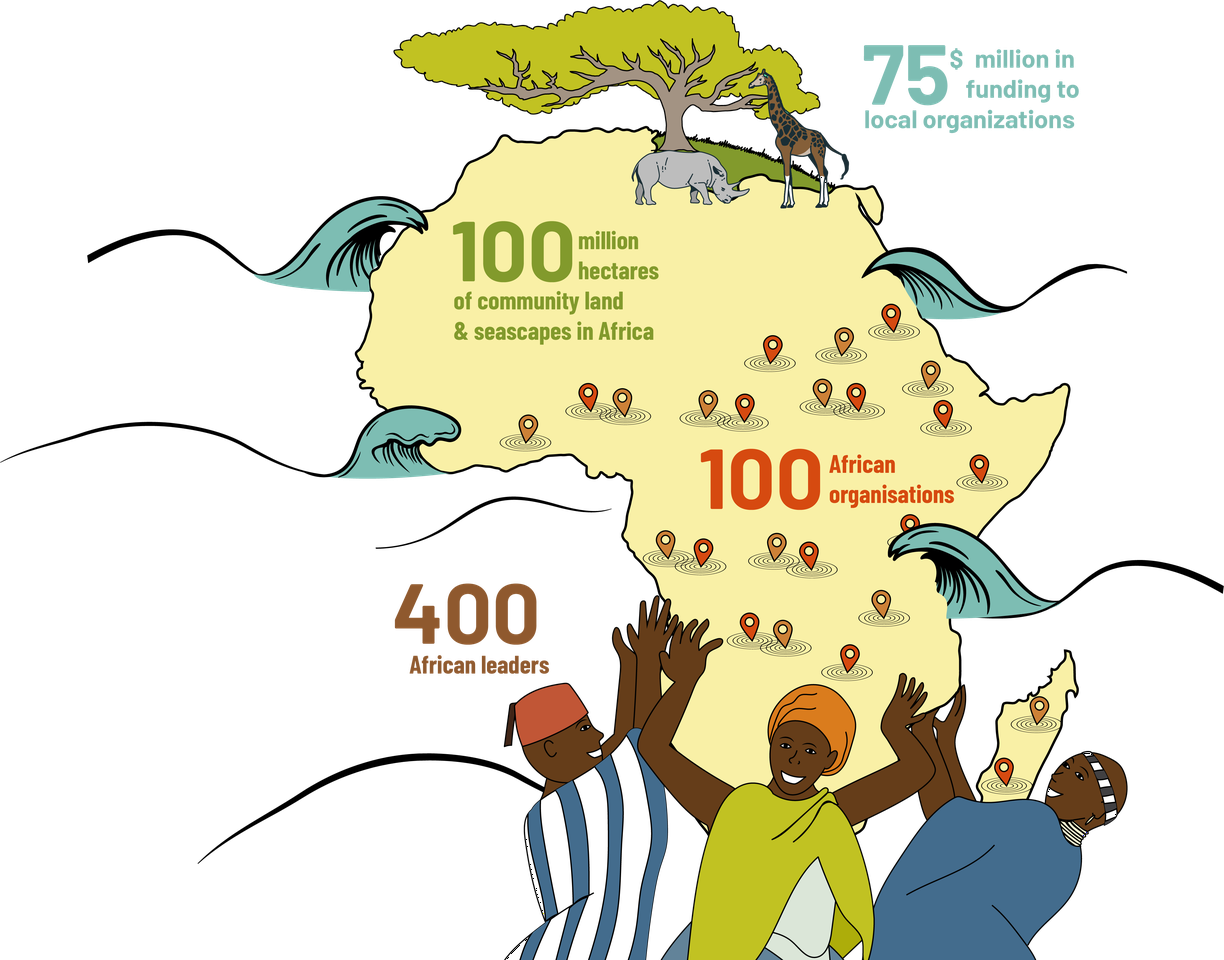
Over the next five years we aim to support improved local management and conservation impacts across at least 100 million hectares of community land and seascapes in Africa. To achieve this we will:
  • Support the growth and development of over 100 high-impact African organisations, including our existing portfolio and carefully selected additional partner organizations.
  • Train over 400 African conservation leaders through our cohort-based programs.
  • Work to direct at least $75 million in funding to our partners, including but not limited to funding that we manage and grant ourselves. We will use detailed country-level strategies to articulate the national community conservation outcomes that our work contributes to, based on our partners’ own strategies, and that will guide our portfolio selection and support. We will improve our ability to document our partners’ environmental and social impacts, and how those build up into national-level influence and change.
A notable decision in this strategy is to include the fifth pillar of work, “Scaling Effective Organizational Development for Conservation,” which addresses our role beyond Africa, something we have long considered and explored in response to numerous inquiries and opportunities over the years. We will not develop a portfolio of direct local partner organizations outside of Africa, but instead will work to better assist organizations that are similar to Maliasili in that they see their role as one of supporting and strengthening local CSOs to realize their full potential. We will provide these organizations with structured collaboration, support, advice, and training, so that they can develop their capacity as in-region organizational development experts.

Lastly, as an organization, we will continue important internal efforts to develop our growing and predominantly African team, by continuing to prioritize and improve on our team’s overall leadership and skills development. Our core organizational priority is to ensure that we remain ambitious in our pursuit of greater reach and impact, while also retaining our core culture and values- our organizational ‘soul’- as this balance has been central to Maliasili’s achievements, and not only the substance but the spirit of our work, over the previous 15 years.
Maliasili exists to help talented local conservation organizations overcome their challenges and constraints so that they can become more effective agents of change in their landscapes, communities, and nations.

Subscribe to our Quarterly Newsletter

Sign up with your email address to receive news and updates.
We respect your privacy.

© Maliasili 2014 - 2026

4 Carmichael St, Suite 111-193, Essex Junction, VT 05452

Maliasili is designated as a public charity (501c3) organization by the Internal Revenue Service.